


Reuters/Beirut
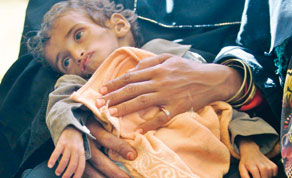
A malnourished boy is held by his mother at a clinic at Al Mazraq refugee camp near the northwestern Yemeni
Children often go hungry in

That is understandable, but ignoring the plight of Yemeni youngsters short of food, education and security is not only cruel but dangerous, according to Geert Cappelaere, the
Failing to meet the basic needs of Yemenis, 54% of whom are aged under 18, could eventually crack their resilience.
“You risk creating a growing group of young people who will revolt and become extremely violent,” Cappelaere said by telephone. “The repercussions of that will not be important just for
When Unicef gained rare access to Saada, a northern province where a shaky truce between the Yemeni army and rebels has held since February last year, it found that 45% of 26,000 children surveyed were afflicted with acute malnutrition.
“We are not talking of chronic malnutrition,” Cappelaere said, noting that half of all Yemeni children suffered from that condition. “These are figures we have never seen in the world.”
Around 300,000 people, two thirds of them children, fled the conflict in the north, he said. Few have returned. The fighting wrecked many homes and livelihoods. Some of the displaced fear retaliation in the 70% of Saada still in rebel hands.
The Sanaa government is also combating an increasingly violent secessionist movement in the south, home to most of
Student protesters inspired by this month’s popular ouster of
Clashes with armed separatists or air raids on suspected Al Qaeda strongholds often prompt people to flee their homes, at least temporarily, disrupting children’s lives, Cappelaere said.
One of the poorest Arab countries,
Last year alone over 80,000 Somali refugees entered the country, while many more probably sneaked in unregistered, Cappelaere said. “Among them we have children, very often unaccompanied, who are at risk of being trafficked.”
Among other looming emergencies, the UN official listed the impact of global food price rises on
“We need to give
“I am hopeful that with a committed government and also with committed international assistance we can bring about a change in