


IANS
New Delhi
The son of late prime minister Lal Bahadur Shastri, who died in Tashkent in 1966 after signing a peace pact with Pakistan, yesterday claimed his father could have been murdered.
Anil Shastri demanded a thorough probe into his father’s death and said all related files must be declassified.
“I do urge the Indian prime minister to release the documents. Not a bad idea to have an inquiry into his death, question all remaining witnesses and clear all speculation and at least establish the negligence,” Shastri, a Congress leader, told news channel CNN-IBN in an interview.
Shastri and then Pakistani president, Field Marshal Ayub Khan, had been invited to Tashkent by then Soviet premier Alexei Kosygin for peace talks following the India-Pakistan war in 1965. An agreement was signed on January 10, 1966 but Shastri was found dead a few hours later, having suffered cardiac arrest.
Shastri’s family, while demanding the declassification of all documents related to his death, indicated that blue marks and white spots seen on his body were signs of foul play.
Recalling the scene, Anil Shastri said: “When his body came to the Palam airport, we found that the body had turned blue and there were white spots on his temple.”
“The moment my mother (Shastri’s wife Lalita Devi) saw the body, she knew it was not a natural death. She told us it was a murder, there was out and out foul play,” he said.
Anil Shastri called it “unbelievable” that the prime minister’s room in the capital of then Soviet Uzbekistan had “no call bell, no telephone, no caretaker in his room and no first aid. He had to walk up to the door himself.” He alleged that the death was due to fault done by the Indian embassy and termed it as “height of negligence”.
“His death was badly handled by the Indian government. It hurts me to a great extent,” he said.
He felt his father was not taken “seriously”, and said: “Postmortem could have been done in Tashkent if there was a request from the Indian government or a request from the Indian doctors.”
“... some close associates feel that suspicion revolves around an Indian hand or a foreign power,” he said.
Anil Shastri claimed that his father had come to know about a scam involving a shipping tycoon Dharam Teja.
Citing an article by eminent journalist Khushwant Singh, Shastri claimed Teja was in Tashkent at the time of his father’s death.
Raising suspicions over the hand of a foreign power in his death, Anil Shastri said: “...Lal Bahadur Shastri had suddenly gained a lot of power, when he retaliated with full force against Pakistan. Whether it was America, China or any third country... I cannot name any country but the truth is Lal Bahadur Shastri was becoming very strong in the region.”
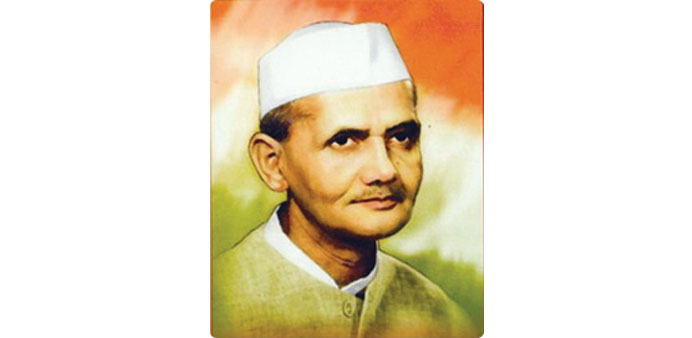
Shastri: foul play in death?