


By Updesh Kapur/Doha
Last week Gianrico Esposito flew to the US to join colleagues from around the world for their biennial conference.
The two-day event was an opportunity to engage, network and reunite with fellow “associates” of Westin Hotels and Resorts, one of the upscale brands of parent group Starwood.
“Associate” is the term given to Westin employees where all are treated as friends and colleagues rather than just as fellow workers.
As they gathered at the leisurely Westin Hilton Head Island Resort and Spa in South Carolina on the US East Coast, it was a time of pride and honour for Esposito.
For the 52-year-old veteran hotelier, general manager of Starwood’s latest addition to its hotel portfolio in Doha, the conference was the perfect platform to showcase the luxury property he is soon to open in Qatar’s capital city.
The Westin Doha Resort and Spa is set to officially open its doors to the public on November 1.
The next six weeks will be the most intense in the career of Esposito who has enjoyed almost 25 years in hotel management with Starwood, essentially working in his native Italy.
It is the Italian’s first overseas posting and presiding over his second hotel opening after taking charge of the Sheraton Malpensa which he opened at Milan’s international airport.
The Doha venture will be the first international chain property to open in the original downtown area of the city – what’s still referred to as Ramada junction – for more than 30 years.
And The Westin Doha becomes Starwood’s fourth property in Doha after Sheraton, St Regis and W, all of which are enjoying runaway success. The presence of four of Starwood’s nine brands is more than any other international chain in Doha.
Esposito hopes to mirror the fortunes of his peer properties in a market that will see a further half a dozen or so new five-star hotels open in the capital over the next 12 months.
The challenge of a hotel opening therefore in a competitive market is one which Esposito relishes with passion.
“Opening a hotel is probably the most exciting experience in the hospitality industry,” he told me during a sneak preview of The Westin Doha before leaving for his company’s conference.
“Whoever works in the hospitality industry is normally driven by passion. An opening requires lot of passion and engagement because you not only work but practically lead all the work you are doing. An opening is like something that has your imprint for so long. It is a different experience.
“When I recently landed at Malpensa, I saw the Sheraton Milan Malpensa and had a feeling this was my hotel even though it is run by someone else. It was raised by me and is one of my children.
“You arrive in a new place knowing you have to start everything from scratch. It requires a lot of passion, planning, project management and execution.”
He explains: “For me, The Westin Doha was somehow given. The design was done, concept done, the number of restaurants done, size of the ballroom and specifications of bedrooms was complete. A few things needed fine tuning when I arrived, but it is the soft part and the creativity now in our hands to sell and market the hotel.”
The focus for him and his team is exactly that: to build the right team that can gel from day one. With virtually all staff not having worked together before, one is like a coach building team spirit, and building a team following the same vision, he says.
With only 10% of the 400-strong opening team already in Doha, Esposito has been determined to put together a multi-cultural workforce of “associates” that have the drive, energy, enthusiasm and personality to do the job in their specific areas, describing the Qatar market as unique.
Due to the nature of Qatar where movement of workforce is difficult compared with other countries, it has been virtually impossible to source talent locally.
“The Middle East by definition has a multi-cultural workforce. You have the opportunity to select the right talent with international experience and it is easier in some countries to find the right profiles than others,” adds Esposito.
Aside from overseas trips by him and his recruiters, interviews over Skype have been a key recruitment vehicle.
“Not ideal,” he says, “but you quickly get to understand the personality, characteristics, attitude and mindset of the interviewee who you think could fit well with the Westin brand.”
The Westin Doha expects to have all 400 staff onboard soon as paperwork is processed, ramping up to between 500 and 600 by the end of next year.
Recruiting is one thing, training is another. While most new joiners would already be hotel-trained staff, the additional challenge of nurturing brand awareness the Westin way, and giving essential destination training is vital for the success of the property.
A new hotel, a new city, a new home means heavy training, more so than in markets like North America, Asia and Europe where most employees would be from the same country.
“In Europe, for example, there is not intense training because there is an understanding of the culture,” says Esposito.
“Here, you have to work a lot on training and preparing your staff. Expectations are higher in the Doha market. Guests are used to luxury. We are marketing a luxury property so it is vital to open the hotel by providing the high level of quality and service that guests expect.”
Marketing manager Sona Shah describes training as a crucial element of Westin’s induction to ensure all hotel ‘associates’ are ambassadors of the brand and convey the right message to guests during interactions.
“The three-day induction includes heads of departments explaining their areas of the business and the culture of the new environment that associates are going to work and live in, a city tour and a one-hour yoga session with the spa director to better understand one of the core values of Westin – enjoying the spirit of well-being,” says Shah.
It is personal well-being and maintaining a healthy lifestyle on the road that are mainstream to Westin’s core values as a brand, ensuring guests feel rejuvenated when they leave any of their 200-plus properties worldwide. Doha is no different.
With a “resort” tag to its name, correctly positioning Westin’s Doha hotel is important across all marketing collateral. The fact that it is “land locked” in the heart of Bin Mahmoud on Salwa Road does not scare the marketers.
Says British expat Shah: “We are Doha’s downtown sanctuary, an oasis in the city. Everything we do at Westin anywhere in the world is designed to have guests leaving better than when they arrived. We base ourselves at Westin on six pillars – eat well, sleep well, move well, play well, work well and feel well.
“We are conscious we are in the city and not a resort by the sea, but that’s the beauty of it. When you step outside, you don’t feel you’re in the city. There’s nature, water, greenery, trees, tranquility – all elements to make you feel good.
“We want to enhance the experience of travellers, not change their lifestyle, but help them pay a lot of attention to the quality of life. If you’re having a corporate lunch for example, we have menus with the healthy option to help guests think about continuing to lead a healthy lifestyle.”
Esposito says personal well-being is becoming an increasing trend, even in the Middle East where people are becoming more conscious of things like diabetes and high cholesterol levels that affect their health and lifestyles.
“There is more attention on health tips locally with the younger generation more conscious,” he says.
“Qatar is heavily sports focused and trying hard to convey healthy lifestyles through various national campaigns, with Qatar Foundation, for example, doing tremendous work in this area. For these very reasons, we believe this is the right time to bring the Westin brand and its core values to the Qatar market.”
With 365 rooms from 49sqm to 250sqm of the Presidential Suite, one of the biggest column-less hotel ballrooms at 2,200sqm, three restaurants focusing on Thai, global cuisine and grilled food, multi-spa treatment rooms and a wave pool to appeal to families, the challenge of selling rests on the shoulders of Portuguese national Ricardo Gomes.
His mission has already started by taking corporate and travel agent partners on tours of the hotel.
“Our priority is to put the Westin Doha in the minds of people,” he says. “When we face clients, our biggest challenge is to make them aware of the Westin brand. In the Middle East it is not a well known brand as in Asia, Europe and North America.
“Being part of Starwood and its highly successful loyalty programme helps create brand awareness of Westin and its values which we can educate the client about to attract them. It’s a great challenge to have.”
With just weeks to go before the opening – an official launch party will however be deferred till early 2016 – testing the new property is a crucial element of any pre-opening.
Staff, friends and colleagues from other hotels in Doha will be invited to stay overnight to try out the rooms, the spa, enjoy the cuisine, bar, and assess the check-in and check-out processes to ensure all run smoothly.
“We have standard operating procedures in all departments on what service should be like, and they need to be tested in a real-life working environment,” explains Esposito.
“Aside from training, we have to prepare with real-life simulation exercises, problem-solving and testing out all our services, and react accordingly if there are issues.
“We have quite long checklists, over 50 different scenarios. The beauty of the hotel industry is every day is different and this is why I feel blessed to be part of this wonderful industry.”
Almost 50 new Westin properties are planned over the next five years worldwide with expansion focused on North America, Asia and Europe.
Doha is the next entry for Westin that hopes to make a significant impact in the Gulf and rest of the Middle East over the next few years.
♦ Updesh Kapur is a PR & communications professional, columnist, aviation, hospitality, travel analyst. He can be followed on twitter @updeshkapur
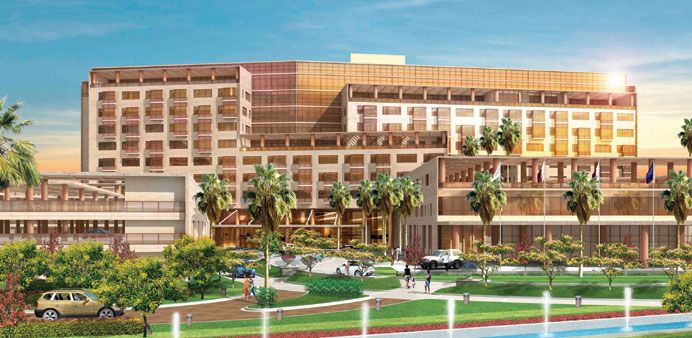
The new Westin Doha Resort and Spa in Bin Mahmoud