


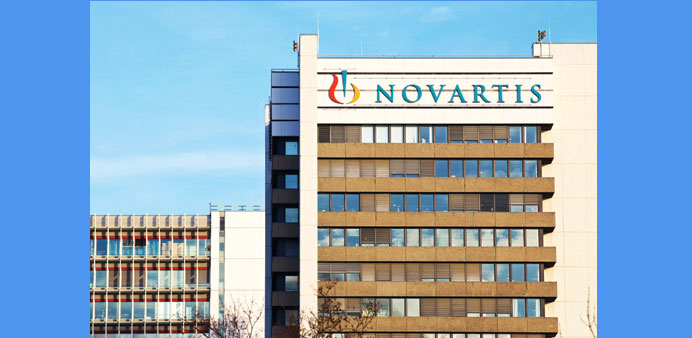
The headquarters of Novartis in Basel, Switzerland. Novartis agreed to buy the rights to an experimental multiple sclerosis drug from GlaxoSmithKline for as much as $1bn.
Bloomberg/Geneva
Novartis agreed to buy the rights to an experimental multiple sclerosis (MS) drug from GlaxoSmithKline for as much as $1bn as it races to catch up with a competing treatment being developed by Roche.
Novartis will pay $300mn upfront to Glaxo ofatumumab, followed by another $200mn after the start of late-stage clinical trials, the Basel, Switzerland-based company said in a statement on Friday. Novartis may pay as much as $534mn more if certain goals are met during the drug’s development.
The drug would compete with Roche’s experimental medicine ocrelizumab, which succeeded in reducing the relapses and disability progression associated with multiple sclerosis in two late-stage studies announced in June. That treatment may reach the market in 2017, while the Novartis drug would be at least two years behind, said Fabian Wenner, an analyst at Kepler Cheuvreux in Zurich.
“It’s a joke,” Wenner said by phone. “Patients either want better convenience than the old drugs or they want better efficacy, and ofatumumab is offering neither of those things. The chances of this being successful in MS and generating any sales are zero in my view.”
Novartis fell 3% to €94.55 in Zurich, amid a decline in European stocks. Shares of Glaxo dropped 1.8%.
More than 2.3mn people suffer from multiple sclerosis, a progressive central nervous system disorder that disrupts brain and spinal-cord functioning. Ofatumumab and ocrelizumab attack a type of white blood cell in the immune system that is a key contributor to spinal-cord damage.
Novartis’s drug is a fully-human antibody that may be less likely to cause unwanted immune reactions than Roche’s product, which is derived from an animal and modified to resemble a human antibody, Novartis said in a statement.
Ofatumumab may also “have the potential for better tolerability and safety,” Novartis said, because it’s a lower dose delivered under the skin every month, compared with Roche’s infusion which is given every six months.
Novartis already has an MS treatment called Gilenya, which was the company’s second-biggest seller last year, with sales of $2.5bn. That drug will lose patent protection as early as 2019. The company needs a successor to “soften the blow,” said Michael Leuchten, an analyst at Barclays in London. Still, ofatumumab will be significantly behind Roche’s product, Leuchten said.
“It fits strategically, but from a timing perspective there’s going to be quite a gap,” he said.