


Brussels
DPA
Eurozone finance ministers yesterday approved Greece’s third bailout package in five years, moving within reach of a deal that will commit the near-bankrupt country to wide-reaching reforms in return for urgently-needed funds.
Athens has been embroiled in bailout talks ever since January, when the leftist government of Prime Minister Alexis Tsipras came to power on an anti-austerity platform. The negotiations have taken their toll on Greece’s economy and strained relations in the 19-member currency bloc.
“(The) agreement will lift the uncertainty that has hung over the country and the euro area for too long,” said European Commission vice president Valdis Dombrovskis, adding that the deal would “create new jobs and restore economic growth”.
Yesterday’s decision paves the way for national parliaments - including the German Bundestag - to vote on the three-year package, which sets a stringent timetable for Athens to cut spending and implement sweeping economic and social reforms.
These include pension and healthcare reforms, market liberalisation, a privatisation drive, an overhaul of the public administration, a crackdown on tax cheats, measures to shore up the financial system and budgetary goals needed to tackle the country’s debt.
Reform progress will be evaluated every three months, with programme adjustments to be made accordingly.
Greece has already implemented a raft of measures in recent weeks to restore credibility after months of increasingly acrimonious talks between Athens and its creditors that eroded trust on both sides.
There is now little time left to implement the new aid package before Greece faces a 3.2bn-euro debt repayment - plus interest due - to the European Central Bank (ECB) on Thursday. It is not expected to be able to make the payment without outside help.
Preparations have been made to supply Greece with a bridging loan to meet urgent payments in case the timetable slips in the coming days.
Athens was forced to temporarily close banks and introduce capital controls in June to prevent money from flowing out of the country after failing to reach a deal extending its previous bailout. Pages 11, 18
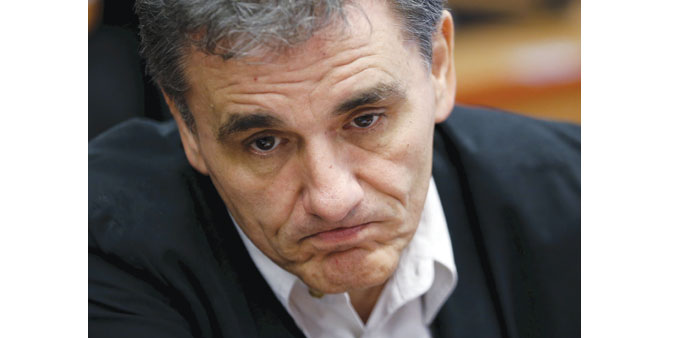
Greek Finance Minister Euclid Tsakalotos at the eurozone finance ministers meeting in Brussels yesterday.