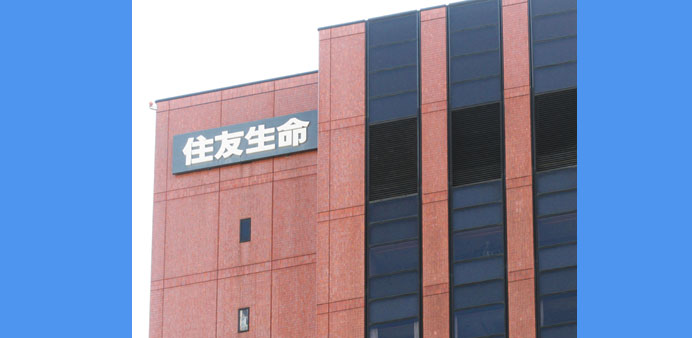
The headquarters of Sumitomo Life Insurance Co in Tokyo. The fourth-largest life insurer by assets in Japan has drawn attention as the next Japanese insurer likely to make a big buy in the US after its two bigger rivals made multi-billion deals in the world’s largest life insurance market.
Reuters/Tokyo
Japan’s Sumitomo Life is in talks to buy Symetra Financial Corp, a US life insurance company with a market value of about $3.1bn, a person familiar with the matter said, the latest deal in the making by acquisitive Japanese insurers looking for growth drivers overseas.
Reuters reported earlier Symetra has been exploring the possibility of selling itself in recent months and possible suitors include Japanese insurers.
Sumitomo Life and Symetra are not likely to reach an agreement in the imminent future and the talks could go on for some time, said the person, who was not authorised to discuss the matter publicly.
Sumitomo Life, Japan’s fourth-largest life insurer by assets, has drawn attention as the next Japanese insurer likely to make a big buy in the US after its two bigger rivals made multi-billion deals in the world’s largest life insurance market.
In July, Meiji Yasuda Life Insurance Co agreed to buy US-based StanCorp Financial Group (SFG.N) for $5bn.
In February, Dai-ichi Life Insurance Co completed a $5.6bn acquisition of mid-sized US life insurer Protective Life in the biggest ever acquisition by a Japanese life insurance company.
A Sumitomo Life spokesman said his company has been studying various possibilities of acquisitions and declined to comment further.
Japanese life insurance market is the world’s second largest and relatively profitable and stable. But insurers face dim growth prospect amid a rapidly ageing population, prompting domestically focused major players to look for overseas.
Nippon Life Insurance Co, Japan’s biggest life insurer with $500bn in assets, has said it is looking for overseas targets and could spend up to ¥1.5tn ($12bn) on acquisitions and investments at home and abroad over the next 10 years.