


By Anand Holla
Seeing is believing, but that may not always be a good thing. Meeting someone new is an experience inextricably couched in our prejudices, in our deep-rooted conditioning to size up personalities using convenient labels. But what if you meet someone without seeing him or her?
For this Ramadan, Coca-Cola Middle East had taken their best shot at fighting stereotypes and the success of their heart-warming Remove Labels this Ramadan campaign points to the power and reach that top corporates wield – and how it’s all the better when there’s an important message to share. The ad has a whopping 15,589,850 views on YouTube thus far and is stirring discussions on prejudices and helping people become aware of their own.
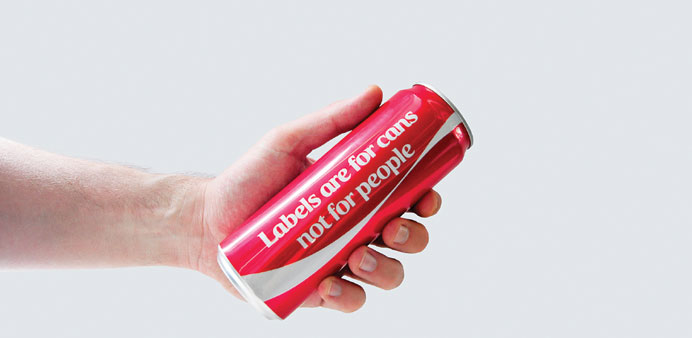
Launched during this Ramadan, Coca-Cola’s campaign sought to tackle societal prejudice “by inspiring the Middle East to remove the labels they put on people.” Through this campaign, Coca-Cola encourages the world to see without labels, and instead open their hearts and see with their hearts. “Coca-Cola is removing its own iconic labels in an effort to promote a world without labels and prejudices,” says the cola giant.
While the campaign was launched during Ramadan, its far-reaching message is meant to go well beyond in the months to come. “Coca-Cola is aware that the way people look and the way they dress can affect the way that others perceive them, before they have even spoken. In fact, prejudice is usually formed in the first seven seconds of meeting someone. This can be based on appearance, nationality or culture,” the company had said, urging people to see each other in a different light for who they really are.
To drive home its point, Coca-Cola Middle East released an ad that takes off from the theme of the Ad Council’s award-winning Love Has No Labels campaign – highly viewed around the world in recent months. Led with an interesting video documenting “a unique social experiment that highlights stereotyping in society,” Coke has played with its packaging by removing the labels from its cans.
Six strangers are invited by Coca-Cola for an Iftar in the dark. They are filmed with infrared cameras as they interact with each other around the table, introducing themselves and their interests and getting to know each other. Basically, they have a conversation “without being able to form any prejudice about their fellow diners based on physical appearance.”
When the lights are turned on, each of them is surprised at the people they had been talking to – none of their perceived estimates of the personalities seem to be correct. Be it the well-built heavily tattooed guy who reads books on cognitive psychology and behavioural science, the guy who looks like a Western expat but speaks excellent Arabic, or a wheelchair-bound man who loves to indulge in adventure trips such as sky-diving; none of them could have been judged by their looks.
In the end, everybody is asked to reach under the table to pull out of a box of limited edition Coke cans, from which the labels have been removed and only a caption reads: Labels are for cans, not for people. The campaign, launched with this web film by Memac Ogilvy Dubai and FP7/DXB Dubai, allows viewers “to see how stereotypes affect their day-to-day lives.”
Islam El Dessouky, IMC Manager for Coca-Cola Middle East, said, “Fighting prejudice is an ongoing global battle, which Coca-Cola Middle East is proud to help combat by reminding the public that labels are for cans not for people. By urging everyone to remove stereotypes we hope to spread happiness to the wider community.”
While Coca-Cola Middle East had been encouraging everyone to #OpenUp throughout Ramadan, and connect with friends based purely on interests and not how they look, it maintains that the idea stays the same beyond Ramadan.