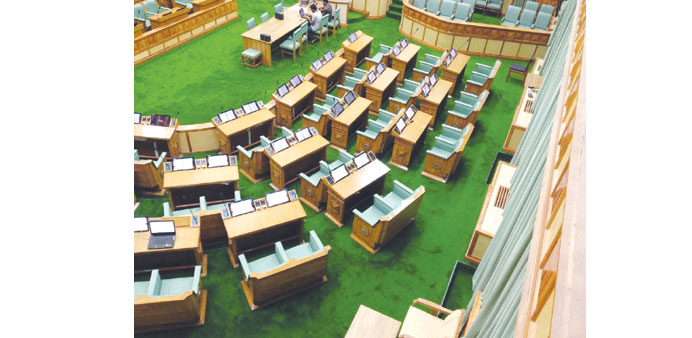
The e-Vidhan system fully automates the day-to-day legislative business and radically changes how the legislation process works.
By Ashraf Padanna/Gulf Times Correspondent/Thiruvananthapuram
The Kerala Assembly will soon go paperless, taking a cue from Himachal Pradesh which became India’s first state last year to adopt E-Vidhan, a secure e-governance platform for legislative business.
“We have already set the ball rolling by digitising the questions and answers in the house. We will also seek federal aid for doing away with papers while transacting the business of the house,” Speaker N Sakthan told the 140-member assembly yesterday.
Responding to Congress Party member Shafi Parambil who wondered why the asembly should be part of large-scale destruction of forests for the pulp to produce paper, the speaker said he would soon call an all-party meet to discuss the issue.
“If everybody agrees, we’ll also go paperless, if not during the current tenure (which ends in April next year),” he said. “The HP legislature has implemented it successfully and the system works well.”
Himachal Pradesh adopted the system developed by the Kerala-based SBL Solutions, which had earlier digitised the entire documents of the state assembly and erstwhile Travancore and Cochin since 1888.
“This will save paper, manpower, time and bring in transparency. It’ll also help people to learn what their elected representatives are doing here,” said Parambil, the young legislator who has the second largest fan following among Kerala politicians on Facebook after Chief Minister Oommen Chandy.
Chandy backed him saying Kerala was soon going to become India’s first digital state with the eGovernance and mGovernance that would limit human interference to a minimum and thereby curb corruption.
The e-Vidhan system fully automates the entire day-to-day legislative busines and radically changes how the legislation process works in India. The system maintains online records for all the proceedings.
The touchscreen-based computer systems deployed for each legislative member inside the house will handle the introduction of bills and laying of various reports and answers on the ‘digital table.’
The members can vote on motions electronically and the system will use digital signature certificates for user authentication. Journalists will be able access digitised content from computers installed in the media room.
Only digitally signed documents converted into PDF/A standards would be allowed to be uploaded on the online system. This will ensure error free, paperless communications within the legislative house.