


By Jason Lloyd in Las Vegas/Akron Beacon Journal
The Cleveland Cavaliers team plane was sitting on the tarmac at Hopkins airport ready to depart for Washington, DC, when the 3pm trade deadline passed in February.
A relieved Brendan Haywood, who had been furiously checking his phone for updates, was relieved when his name was never mentioned. He joked to hurry up and close the door, shut off the Wi-Fi and get the plane in the air. He won’t be so fortunate this time.
Another deadline is looming for Haywood, one that most assuredly signals his end with the Cavs. His $10.5 million contract for this season becomes guaranteed on Aug 1, leaving the team a little less than three weeks to move him.
Despite reports of trade talks with the San Antonio Spurs, Brooklyn Nets and Los Angeles Clippers, the emerging reality is the Cavs probably won’t make a big move with the contract at all.
The team thought the value would be much different when they acquired it during last summer’s draft, but that was before LeBron James returned and Kevin Love arrived. Technically, Haywood’s unique contract was acquired even before Kyrie Irving agreed to his max extension. Almost overnight, the Cavs went from no max players to three, and depending on what happens with the Tristan Thompson negotiations, they could have close to four max players by the start of next season.
The soaring tax bill associated with that has impacted how the Cavs can use Haywood’s deal, and realistically there aren’t many trade matches right now. While Joe Johnson looks nice on paper, Iman Shumpert likely fits this starting lineup better for what the Cavs need out of the position, and $20 million is a lot to pay a bench player. It’s a moot point now, anyway.
After the Nets bought out the remainder of Deron Williams’ contract on Saturday, they’re now under the tax threshold and no longer have a real urgency to trade Johnson. The vast majority of executives polled during summer league believe Johnson is now off the trade market because the Nets really didn’t want to move him anyway. Jamal Crawford, however, remains available.
Despite insistence from the Clippers to the contrary, league executives in Las Vegas believe they would be willing to part with Crawford, who has been linked to the Cavs in trade talks.
But the optimism surrounding the Cavs and J R Smith striking a new deal renders a move for Crawford unnecessary at this point, particularly considering what it would cost the team in luxury taxes. If Smith departs in free agency, the need for Crawford increases.
James made clear his desire during the red carpet premiere of his Hollywood film Trainwreck.
“We’ve got to re-sign Tristan,” James said Friday. “Hopefully, we can bring back J R (Smith) as well.”
If James, who initially endorsed the trade for Smith, wants him back despite his dismal Finals performance, then Smith is a strong candidate to return.
So where does that realistically leave the Cavs regarding Haywood? Probably turning his contract into a second-round pick or a trade exception.
It’s unrealistic the Cavs could fetch a first-round pick for Haywood unless they absorbed bad money. There just isn’t much of that around the league right now and, besides, that doesn’t seem likely from the Cavs’ perspective given the tax ramifications. A second-round pick is feasible. The Cavs don’t have any draft picks next summer and don’t own a second rounder until 2019. But a trade exception could be the most effective route.
By trading Haywood to a team like the Philadelphia 76ers, who have made similar moves with the Cavs recently, they can turn Haywood into a $10.5 million trade exception to hold for another year as sort of an insurance policy in case anyone is injured.
The Sixers would immediately release Haywood (or trade him again), not owe him a dime, and probably gain a future second-round pick for the paperwork.
It isn’t sexy, it isn’t Tiago Splitter or Johnson or Crawford. But the stated goal at the start of this process was to retain last season’s nucleus. If that happens, and they’ve already upgraded the backup point guard position with Mo Williams, there aren’t any glaring needs left.
A trade exception buys more time and protects against injury. At this point, it might be the safest, most prudent and financially sound way to go.
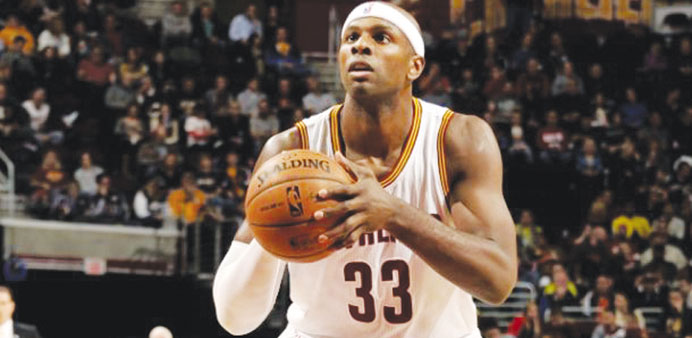
Brendan Haywood