


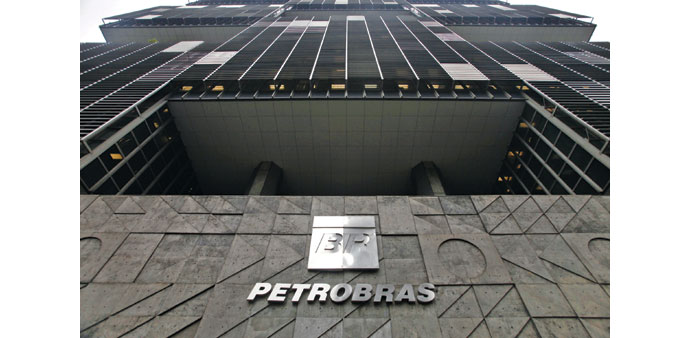
The headquarters of Petrobras in Rio de Janeiro. Selling assets would help Petrobras avoid an alternate debt-reduction strategy that frightens shareholders - a dilutive share offering while the stock is near its lowest in a decade.
Bloomberg
Rio de Janeiro
Petroleo Brasileiro’s $58bn asset sale proposal would be unprecedented for the oil industry - and for good reason. It may be impossible to pull off.
The plan, released last week by the Brazilian state-run oil company known as Petrobras, calls for $15.1bn in divestments by the end of 2016 and an additional $42.6bn by 2018, part of which will come from restructuring. The last company to come close to Petrobras’s target was BP, when it sold more than $30bn in a downsizing strategy after the Deepwater Horizon oil spill.
Chief Executive Officer Aldemir Bendine’s strategy is to cut debt without abandoning plans to develop oil discoveries 200 miles off the coast of Rio de Janeiro. Selling assets would help Petrobras avoid an alternate debt-reduction strategy that frightens shareholders - a dilutive share offering while the stock is near its lowest in a decade. But the assets are coming to market as a collapse in oil prices weighs on asset values and the financial wherewithal of would-be buyers.
“On a net basis, people are looking to sell, not buy,” said Guy Baber, an analyst at Simmons & Co Separately, “Petrobras as a company over the past 10-plus years has chronically fallen short of the targets that they set.”
Petrobras didn’t respond to a request for comment. Its shares rose 2.1% to 11.79 reais at the close Sao Paulo.
The asset sales would almost halve by 2020 the company’s ratio of net debt to earnings before interest, taxes, depreciation and amortisation, or Ebitda, Petrobras said in a filing last week.
Currently that ratio is 5 times Ebitda, the highest for Petrobras since at least 1997, according to data compiled by Bloomberg.
The new divestment strategy - a significantly upsized version of a plan first unveiled earlier in the year - is intended to preserve Petrobras’s investment-grade credit rating, after Standard & Poor’s and Fitch Ratings assigned a negative outlook to its BBB- score. But that all depends on rating companies’ willingness to trust Petrobras, Credit Suisse Group AG analysts Andre Sobreira and Vinicius Canheu wrote in a June 29 research report titled “Petrobras: Do you believe in $58b divestments?”
At $57.7bn over four years, Petrobras is proposing an average divestment pace of $14.4bn a year, a mark that only two oil companies have ever hit: BP, after the spill, and ConocoPhillips with its 2010 restructuring, according to data compiled by Credit Suisse. Neither achieved that in consecutive years, as Petrobras is proposing.
At least part of the process is already under way. The assets include prized offshore oilfields in what is called the pre-salt region and stakes in pipelines, people with knowledge of the matter said in April. Petrobras hasn’t publicly disclosed most of the details. The driller has enlisted a group of banks including Citigroup, Banco Bradesco, Banco Santander Brasil and Bank of America Corp, people familiar with the situation have said.
Also among the assets under consideration is Petrobras Distribuidora, known as BR, its fuel distribution unit. The company said last week in a regulatory filing that it is studying a public share offering, minority stake sale or combination to raise funds. Bank of America analysts Frank McGann and Vicente Falanga Neto said in a research note that a 49% stake could raise as much as $3.6bn, or 24% of its 2015-2016 asset sale target.
Even if it can muster enough buyer interest, Petrobras’s public struggles are likely to hurt its negotiating position, according to Pavel Molchanov, an analyst with Raymond James Financial. The auction comes as Bendini, who entered Petrobras in February, steers the company through daily revelations in a bribery scandal that has implicated former executive directors and some of its main suppliers.
“I don’t think it is impossible” to sell the assets, Molchanov said by phone. “You can always sell a $100 bill for a dollar, but that’s not a good way for anybody to make money.”