


To feel the weight of what you wrote in the hand is another feeling from pressing the send button, Sophia Hoffmann tells Rebecca Krizak, as the blonde Berliner’s tattooed arms still tie a cooking apron around her waist on most days, but now often reach for the laptop too
What Stockholm hipsters are wearing these days or how Berlin’s vegan recipes taste is all on show in the world of blogs.
It’s also showing up in the world of books. Popular bloggers have been landing profitable publishing deals. It’s an easy option for book publishers, because they can see the words and pictures before they buy, and judge in advance how popular the author is.
Blog-to-book is the name for the new trend.
At first glance, signing up for a publisher’s cash advance might seem to clash with the independent spirit of blogging, but a German chef turned blogger and author, Sophia Hoffmann, sees it differently.
“To feel the weight of what you wrote in the hand is another feeling from pressing the send button,” says the blonde Berliner, whose tattooed arms still tie a cooking apron around her waist on most days, but now often reach for the laptop too.
Since 2011, Hoffmann made a name for herself writing online about vegan cuisine.
Her recipes now appear in her German-language cookbook Sophia’s Vegan World, issued six months ago by Edel Books after the publishing world twigged the broad appeal of her “Oh, Sophia, Happy Vegan Cuisine” blog.
So what’s the secret recipe for making the leap from blog to book? In Hoffmann’s case, it was likely the combination of new dishes, a fresh and accessible writing style, and a little guilty pleasure.
“I basically stake my name and good immune system on a healthy, balanced diet based on lots of vegetables and a naughty pinch of sugar and white flour here and there. But there are also days where you just want something good and greasy, crispy but dripping,” Hoffmann blogs as she gives a recipe for mini pizzas.
Unlike the work of some other bloggers, her cookbook is not a duplicate of its internet self.
It offers plenty of new recipes that readers won’t find online.
The digitisation trend reverses in a sense what was happening a few years back, when established book authors awkwardly tried to blog.
The native bloggers used to be trendsetters.
Now, bringing out a printed book is the icing on the cake for the ambitious blogger. For chef Hoffmann, “the book was a dream come came true.”
Especially with lifestyle topics such as fashion, design and cooking, these bound editions are now booming.
Everything that occupies the “gift book” niche is now assured a certain degree of popularity, exemplified by the fortunes of a new “blog book” in German with a title that translates as “SMS from Last Night.”
Funny and embarrassing text messages were first collected in a blog, and then published as a book. The continuing online feedback is obviously missing from the book, but the SMS compilation is doing remarkably well in sales and is now at its fourth volume.
“These books are often aimed at fans who want to keep them on a bookshelf,” a spokeswoman for the Munich-based Riva publishing house says of the success of the blog books. “When you scroll through such sites, you have forgotten everything an hour later.”
A book is therefore valued, because it keeps the highlights of a blog in permanent form.
One blog book that especially helped to stem the tide of “fast forgetting” is a work by Chinese artist and activist Ai Weiwei.
Ai published his criticisms of the Chinese leadership on the internet and the text was fortunately downloaded, translated and compiled in book form before his blog was closed down, a victim to the state censors in 2009.
Most blog books are a lucrative secondary-use business that doesn’t require much effort or expense. Many bloggers publish their blog books themselves without a publisher behind them.
And since the established publishers are reluctant to relinquish their hold on this new market, they now employ unusual tactics to clinch the deal, as happened with a German architect, Van Bo Le-Mentzel.
On his blog Hartz IV Moebel, Le-Mentzel explains how to build your own furniture and save money and resources.
His fans wanted him to turn this into a book and his Facebook group promptly swelled with ideas, funding offers and pledges to buy the finished book. Noting the buzz around the whole project, the Hatje Cantz publishing house jumped in with a proposal to produce the book, to no avail. “We didn’t need a publishing house,” says Le-Mentzel.
The managing director of the publishers then went onto Facebook and persuaded the architect’s supporters to invite them on board, with a guarantee of a far greater print run than the independents planned.
“Canvassing via the Facebook group was unusual for the publishing house, but it’s the way of the future,” concludes Le-Mentzel about the unexpected train of events.
Cooking blogger Hoffmann sent her book concept to publishers herself.
She has no worries that her fans will no longer read her blog after buying the book, and she is already planning her own food channel on YouTube as a kind of interactive progression of the blog-turned-book.
“That’s where the contents of the book will really come to life,” she says.—DPA
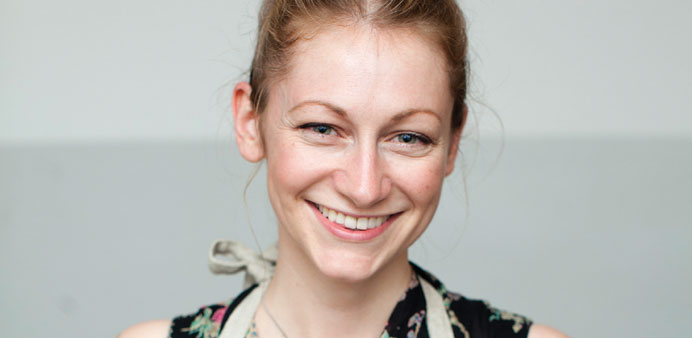
BROAD APPEAL: Sophia Hoffmann