


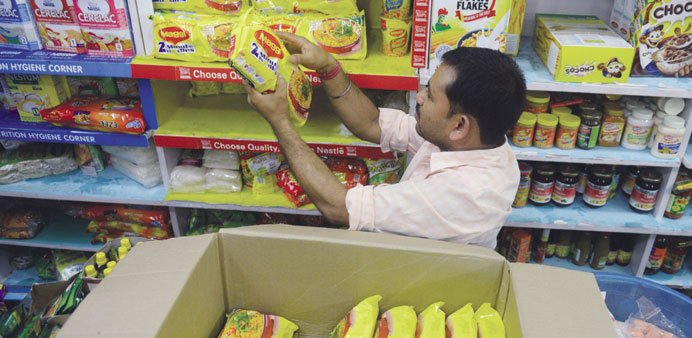
An Indian shopkeeper removes packets of Nestle ’Maggi’ instant noodles from the shelves in his shop in Siliguri yesterday.
AFP/New Delhi
India’s food safety regulator yesterday banned Nestle from making and selling its hugely popular Maggi instant noodles, calling them “unsafe” and “hazardous” after tests found they contained excessive lead.
The Food Safety and Standards Authority of India (FSSAI) said it was ordering Nestle to halt manufacturing after tests by some states found lead levels above statutory limits.
Nestle, which denies the charges and says the noodles are safe to eat, had already announced it was pulling the product from sale as it seeks to contain growing safety concerns.
An FSSAI statement said it was ordering Nestle India to “withdraw and recall all the nine approved variants of its Maggi Instant Noodles from the market... and stop further production”.
It said tests had found the noodles to be “unsafe and hazardous for human consumption”.
Nestle, which says the lead content in its Maggi noodles is well below the limit, had already announced it would withdraw the product from sale as it tries to contain the growing scandal.
Yesterday its global chief executive Paul Bulcke said the product was “safe for consumption”.
“We decided to take off the noodles from the shelves as there was confusion about the safety,” he said at a press conference in New Delhi.
“The safety of our consumers is paramount. We are working with the authorities to clear up this confusion.”
At least six states including the capital have announced temporary bans on the sale of the instant noodles in the past few days, after officials said test results showed high lead levels.
The FSSAI said the presence of lead “beyond permissible levels” could make the product “unsafe and hazardous”, citing risks of damage to the kidneys and the nervous system.
Activists in Kolkata on Thursday burned packets of the noodles in protest, underscoring the scale of public anger.
Nestle has been selling its Maggi brand for over three decades in India, and has 80% of the country’s instant noodle market.
The product - marketed as a quick and healthy snack - grew increasingly popular as more and more Indians moved away from their homes to study or seek work.
It emerged as one of India’s five most trusted brands in a consumer survey conducted last year.
The scare met with a mix of outrage and disappointment in India, where it was one of the top trending topics on Twitter yesterday.
Many users welcomed the ban and the best-selling novelist Chetan Bhagat tweeted that Maggi was “junk being sold as emotional nectar to Indians daily”.
Others defended the product and said they had been eating it for decades with no ill effects.
“My work often involves travel and odd hours, which over the years made Maggi my favourite snack,” 30-year-old IT worker Puneet Raheja said.
“I think that this controversy will soon blow over.”
The scare began when food inspectors in Uttar Pradesh said they had found high lead levels in two dozen Maggi noodle packets during routine testing, along with the flavour enhancer MSG (monosodium glutamate), which is not listed in the ingredients.
Stars try to wash hands off controversy
Charges were filed in Bihar against Nestle officials and Bollywood actors Amitabh Bachchan, Madhuri Dixit and Preity Zinta, brand ambassadors of the food item, following a court order. Bachchan has distanced himself from the brand saying “he does not endorse the product anymore”, while Preity Zinta was shocked that the she was “being sued for doing the Maggi commercial over 12 years ago”. Madhuri Dixit has taken to Twitter to explain: “Like most of India, I have enjoyed Maggi noodles for years. I was very concerned after recent reports and met with the Nestle team. Nestle explained that they always place the consumer first and have the highest quality standards. Nestle has reassured me that they adhere to stringent testing for quality and safety and are working with the authorities closely.”