


DPA/Brussels
European officials expressed criticism yesterday of a Russian blacklist of 89 people who have reportedly been banned from entering the country.
Moscow has prevented several European politicians from travelling to Russia in recent months, citing a confidential blacklist of banned individuals, but without releasing information about the list.
But details began to emerge on Friday, days after Russia turned away conservative German lawmaker Karl-Georg Wellmann, who chairs the German-Ukrainian group in parliament and has criticised Moscow over the conflict in eastern Ukraine.
“The list with 89 names has now been shared by the Russian authorities,” a spokesperson for EU foreign policy chief Federica Mogherini said yesterday adding: “We don’t have any other information on legal basis, criteria and process of this decision.”
“We consider this measure as totally arbitrary and unjustified, especially in the absence of any further clarification and transparency,” the spokesperson said in a statement.
German Foreign Minister Frank-Walter Steinmeier said the list would not help with efforts to defuse the “stubborn, dangerous conflict” in eastern Ukraine, during a visit to the region.
“I don’t think it is particularly clever to even pronounce such entry bans,” Steinmeier said in the eastern city of Dnipropetrovsk.
Germany has demanded further clarification from Moscow, the foreign ministry said in Berlin, adding that people on the list had a right to know why they have been included so they can take appropriate legal action.
The Ukraine crisis has brought relations between the European Union and Russia to their lowest point since the end of the Cold War.
The EU has imposed sanctions, including asset freezes and travel bans on 151 Russians and Ukrainians, over Moscow’s annexation of Ukraine’s Crimean peninsula and alleged support of pro-Moscow separatists.
The Russian list, posted online by Finnish broadcaster yle, includes Wellmann and a string of other parliamentarians, such as EU lawmakers Rebecca Harms of the Greens, Guy Verhofstadt of the liberals – a former Belgian prime minister – and former Polish premier Jerzy Buzek.
The authenticity of the leaked document could not immediately be confirmed.
Moscow has not commented on the release of the “secret” blacklist.
It also includes former British deputy prime minister Nick Clegg, senior German government advisor Uwe Corsepius, former EU neighbourhood policy commissioner Stefan Fule and French intellectual Bernard-Henri Levy, as well as senior European military figures.
“This further diminishes mutual trust and hampers any efforts for constructive dialogue to find a peaceful and lasting solution to the current geopolitical crisis,” said EU Parliament President Martin Schulz.
He called on Moscow to “ensure transparency of their decisions, in line with international law and legal obligations, allowing the targeted individuals the right of defence and of appeal”.
Dutch Prime Minister Mark Rutte had confirmed the existence of the list on Friday.
Foreign Minister Bert Koenders summoned the Russian ambassador and expressed his outrage, calling for transparency and justification of the travel bans, a spokesman said.
“We reject this approach by Moscow and have already communicated that,” Rutte said in The Hague.
Three Dutch lawmakers are affected.
“This list is not good news for relations between the EU and Russia,” said Harms, who has previously been turned away by Russia.
It targets politicians who are campaigning for Ukraine and for human rights, democracy and civil society in Russia, the Greens lawmaker said.
“Clearly [Russian President] Vladimir Putin sees honest criticism over his authoritarian approach as a threat to his power,” she added.
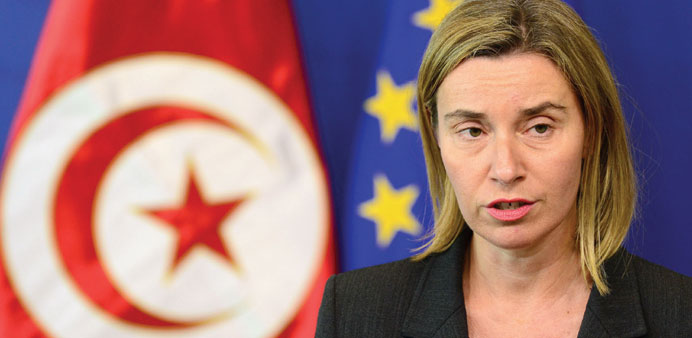
Mogherini: her spokesperson has said that her department has no ‘other information on legal basis, criteria and process’ of the Russian decision.