


AFP/ Riyadh
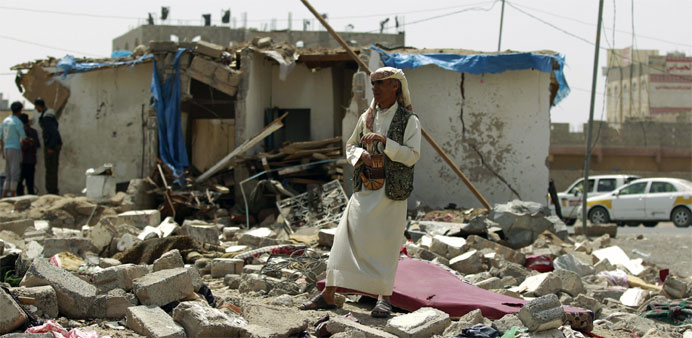
The Saudi-led coalition bombing Yemen on Monday blamed ceasefire violations by rebels for the resumption of air strikes against them.
"They did not respect the humanitarian pause. That's why we do what is necessary to be done," Brigadier General Ahmed al-Assiri told AFP.
"There is an operation in process."
The Arab-dominated coalition resumed bombing an hour after the five-day truce ended at 2000 GMT on Sunday.
The pause was proposed by Saudi Arabia to allow urgently needed humanitarian aid into Yemen after more than six weeks of bombing, and battles between pro-government and Huthi rebel forces on the ground.
"These militia did not stop their fighting. They continued to attack borders, to attack cities in Yemen," Assiri said, adding there was "a very big change on the ground" during the pause.
He accused the Iran-backed rebels of moving missiles with a range of about 70 kilometres (43 miles) towards the border with Saudi Arabia, said there was shelling "every day" of the Saudi boundary zone and alleged the rebels "hijacked" food and fuel aid in Yemen.
The coalition has been bombing the Houthi rebels since late March, in an attempt to stop their advance after they seized the capital Sanaa and swept across many other regions.
Analysts say the air strikes have failed to push back the Huthis.
Asked about the possibility of another truce, Assiri said: "When we talk about ceasefire it should be a negotiation between two parties, but those militia, since (UN Security Council Resolution) 2216, reject everything."
The resolution passed in April imposed an arms embargo on the rebels and demanded that they relinquish seized territory.
A Western diplomatic source said that if the rebels were, as alleged, moving heavy weapons towards the border during the truce, they may have hoped to disrupt a political conference which ends on Tuesday in the capital Riyadh.
The rebels have boycotted the conference which other parties are attending to discuss Yemen's political future.
The diplomatic source said the Saudis "can have no real interest" in further prolonging the military campaign as they face intense international pressure for a political solution.
Assiri said political moves such as the Riyadh conference are working in tandem with military action "until the Yemeni government could be able to run the country".
President Abedrabbo Mansour Hadi fled the Houthis' advance towards Aden for Riyadh in late March.