


By Updesh Kapur/Doha
We will not grow further north, south, east and west,” says an adamant Ghaith Al Ghaith, boss of the Gulf’s youngest scheduled airline.
Straight to the point, the chief executive officer of flydubai dismisses suggestion that he will change course and chart a new strategic direction for his airline. For the moment that is.
The talking point came up during a meeting with the dynamic CEO as he showcased the best attributes of the airline’s inflight offering at a recent travel show in Dubai.
Since its inception in 2009, flydubai has developed a strategy of opening routes not only within the Gulf, and further afield across the Middle East, Africa and sub-continent, but deeper into central and eastern Europe.
The geographical focus is five-and-a-half hours flying time from home base in Dubai. But the airline has been stretching the limit in recent years to get the best out of its aircraft and the best out of market conditions.
The Russian capital Moscow to the north; Tanzania’s capital city of Dar Es Salaam to the south; Prague to the west; and Bangladesh’s second largest city to the east are currently the furthest points served by flydubai.
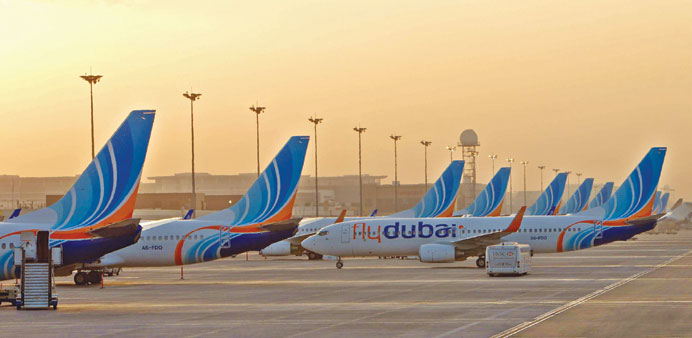
The Czech capital Prague takes pole position as the furthest point flown at six hours 20 minutes. Flydubai’s operations extend to 87 destinations, rapidly approaching the magical 100 figure. With a near 50-strong fleet of all Boeing 737-800 aircraft, it is just four months away from reaching the milestone half century of planes.
Route announcements have come through thick and fast over the past six years. A record 23 new routes were launched in the space of just 12 months during 2014. So far this year, 11 routes have been inaugurated. New flights to destinations in Russia and central Europe have surprised many as these parts of the world were not seen as prize air corridors.
But to the contrary: the market potential, the traffic demand and the lure of flying a new wave of tourists to Dubai and flying expats back home at lucrative fares have been the stimulus for planning the routes.
In recent weeks, flydubai announced a Russian expansion despite a sharp fall in visitor numbers to Dubai as a result of woeful economic conditions in Russia. With Novosibirsk – the most populous Russian city after the capital Moscow and St Petersburg – and the country’s fifth largest urban area Nizhny Novogorod joining the network this year, flydubai’s reach in Russia will extend to 10 cities, becoming one of its key source markets.
Similarly, flydubai is making a huge push into Iran, announcing a start-up to Lar, adding to the recent launch of operations to Ahwaz, Bandar Abbas, Esfahan, Hamadan, Shiraz and Tabriz, and already established Tehran and Mashad.
Its Iranian adventure will grow to nine points, but like Russia, the carrier is looking for more opportunities. The same applies to India and Saudi Arabia where flydubai is keen on more capacity, currently flying to nine destinations and 12 cities respectively. Pakistan too, with only three points served, is a focus of growth.
“We do not have enough capacity in these markets, therefore continuing to look for more traffic rights,” says Al Ghaith. Passenger demand is strong yet capacity is not sufficient to serve these key markets. Across our network, 57 points were previously underserved or had no direct flights from Dubai at all, so our growth strategy is clear to open up more undeserved markets.
“This is through new routes and increasing frequency on existing routes to provide the travelling public with greater choice.
“We are in a business where there are always opportunities and flydubai’s strategy is to explore them. We look at the geographical location and the populations served and make a decision based on the market opportunities that exist.”
Multiple frequency is a key component of the strategy. Doha was flydubai’s first GCC market, launched within four months of the airline’s June 2009 start-up. From a twice-daily operation at the time, today it operates 10 daily flights on the Doha-Dubai route. Alongside home-grown carrier Qatar Airways’ 14 daily flights and Emirates’ seven-daily services competing directly with flydubai to Dubai International Airport, a combined 31 flights each day, each way, has made the Qatar-Dubai market the busiest air corridor in the Gulf.
Clearly pointing fingers at flydubai, Qatar Airways last week said its newly-branded Doha-Dubai shuttle service was in response to a “dumping” of capacity on the route by the competition. But Al Ghaith takes it in his stride, simply saying competition is healthy and there is a market for all.
The pace of growth has been phenomenal. Like its full-service “big three” peers in the Gulf – Emirates, Etihad and Qatar Airways – flydubai has pursued an aggressive growth strategy. But unlike its peers’ marketing strategies, flydubai promotes itself as an airline offering flights at affordable prices. And it vehemently shies away from the low-cost, no-frills, budget carrier tag, instead preferring to promote efficiency keeping operating costs at a minimum.
In operating to destinations that are either already served by other carriers, or not at all, the flydubai name strapped across the fuselage helps fulfill its key goal of supporting Brand Dubai. And it is the Dubai brand that is being pushed to further elevate the most visited and most preferred destination in the Gulf. With Dubai set to take its premier status to a new level by hosting Expo 2020, a six-month event drawing nations from around the world to promote international trade, commerce, innovation and sustainable development, the seeds are firmly being planted to attract more and more visitors. Two-thirds of flydubai’s passenger traffic ends up in Dubai while the rest transfers onto other flights, effectively creating a successful hub-and-spoke model.
Many observers said flydubai, launched by the government of Dubai, would eat into the business of sister operator Emirates because of a sizeable number of overlapping routes. Emirates supported the launch of flydubai in the initial phase, but the business models are distinctly different. Complimentary food, checked-in baggage and inflight entertainment all included in the ticket price of Emirates’ full-service operation versus the no-frills offering of flydubai where different components of the travel experience are paid for by passengers. By charging for food onboard, headsets and additional checked-in baggage, revenue earned offsets the cost to help balance the numbers in its favour.
Recognising a strong market for corporate traffic, flydubai brought onboard a Business Class product fitted on most of its fleet over the two three years. A clear departure from the low-cost, no-frills model, but the introduction of a business cabin has given rise to a hybrid title – in between low-cost and full-service.
Al Ghaith once again says opportunities are the key to the airline’s philosophy and with an evolving strategy, is always looking at how the business can be taken one step further.
But he remains adamant that despite the carrier spreading its route network further afield, longer range flights to western Europe and southeast Asia are not on the cards. Doing so will require a complete fleet rethink which, he says, is not being considered.
“We will not grow further north, south, east and west,” he says.
“We are bringing in new planes from next year as part of our fleet renewal programme, but they are all designed to operate within a radius of six hours.” The first of 111 new Boeing 737 aircraft, including the next generation 737 MAX 8s, are set to be delivered over a seven-year period from 2016. These aircraft, a record order worth US$8.8bllion, would typically add a further 30 minutes to the existing single-aisle planes’ flying time.
Flydubai has come a long way in a short time span that has seen its network expand rapidly, a business model that has been accepted by consumers, and a commitment to flying to undeserved markets with a modern fleet of planes. All this combined have helped it, under the stewardship of Al Ghaith, to earn the Best Regional Airline serving the Middle East at the recent 2015 Business Traveller Middle East Awards.
Having earned a distinguished career holding senior positions with Emirates over two decades, Al Ghaith has successfully made his mark in bringing to Dubai a concept that spans the low-cost, no-frills, budget and hybrid models.
♦ Updesh Kapur (below picture) is a PR & communications professional, columnist, aviation, hospitality and travel analyst. He can be followed on twitter @updeshkapur