Reuters/London
Emerging equities snapped a two-day losing streak yesterday, helped by gains in Asia, but were on track for a second straight week of losses while currencies weakened amid a continued fall-out from the global bond rout.
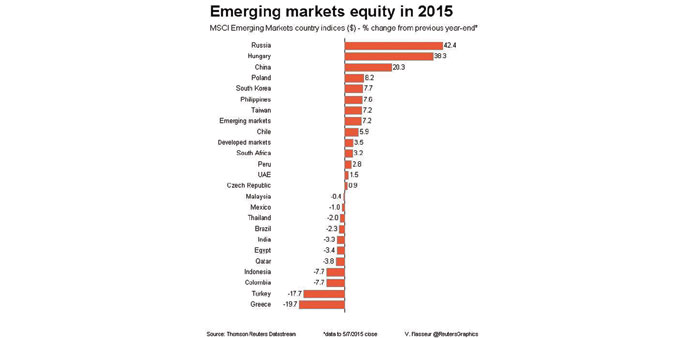
The MSCI emerging market index gained 0.7%, supported by Chinese and Indian stocks adding some 2%, and getting breathing space amid signs that global bond markets were stabilising.
Global bond yields have hit multi-week highs in recent days, especially in Europe, as investors rushed to exit crowded long positions, built up to take advantage of the European Central Bank’s quantitative easing programme, weighing heavily on bourses.
“There’s a bit of calm beginning to come through but we still see the recent moves as positioning squeeze in bunds rather than a positive reflation trade,” said Manik Narain at UBS.
“It’s going to be a choppy environment for emerging markets”
Many currencies remained under pressure with the dollar index trading flat and investors cautious ahead of key US payroll figures, expected to show a jump of 224,000 new jobs in April after a run of generally disappointing US data.
Russia’s rouble fell by 2% against the dollar, weighed down by profit-taking ahead of a holiday weekend and oil heading into the red for the second straight session, and dollar-denominated stocks were down 1.3%.
South Africa’s rand and Turkey’s lira both slipped against the dollar, while central European currencies traded around 0.2% lower against the euro.
Meanwhile, some government bonds in the region continued to recover after a selloff earlier in the week.
Poland’s 10-year bond yield dropped by six basis points venturing further away from the seven-month highs hit earlier this week.
Countries across central and eastern European had recently posted a good run of economic data, said Piotr Matys at Rabobank, which should continue to attract investors.
“We maintain our constructive view on (central European) assets based on expectations that the unprecedented monetary policy stimulus announced by the ECB earlier this year will fuel capital inflows into Poland and other countries in the region where economic outlook is relatively positive,” Matys said in an emailed note.