Reuters/London
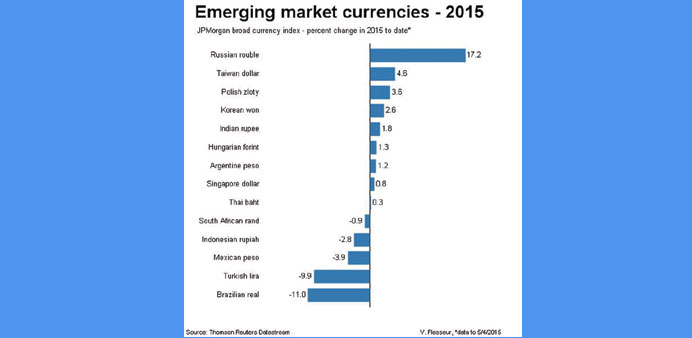
Emerging market currencies came under pressure from a rising dollar yesterday, while a 4% plunge in Chinese stocks - their biggest in nearly 4 months – sent a shiver through equities.
Trading was still subdued in Europe after Mayday holidays in much of the region but the mood was cautious after some volatile moves in Asia overnight.
China stocks had been dumped by investors ahead of a fresh wave of initial public offerings and on media reports that some of the country’s top brokerages had tightened their financing rules in a bid to control risk.
“A correction is long overdue,” said Li Yang, analyst at Changjiang Securities in Shanghai, pointing out the 80% surge in Chinese stocks over the last six months.
“But I don’t think the correction would put an end to the bull run.”The sell-off left MSCI’s main emerging market stock index down 0.5% and in the red for a fourth session in the last five.
Eastern European stocks bucked the trend and rose, but for the region’s currencies and bonds it was a different story.
Poland’s zloty, the Czech crown, Hungary’s forint to Romania’s leu all sank against the rising dollar and their bonds continued to be buffeted by a sell-off in the eurozone’s periphery markets.
Fresh worries about a writedown of Greece’s bailout loans saw its 2-year yields surge over 100 basis points yesterday.
Focus was otherwise on the dollar’s resurgence, which has ended a brief better spell of better performance for some of EM’s most fragile currencies including Turkey’s lira, Brazil’s real and Nigeria’s naira.
Indonesia’s rupiah hit a near five-week low overnight after economic growth slowed more than expected. Malaysia’s riggit also tumbled, dropping 1.3% to 3.6100 per dollar as its markets reopened having been closed on Monday.
Pakistan was one of the few in Asia to get a boost.
Its credit rating outlook was upgraded to B- positive from B- stable by Standard and Poor’s in a nod to the improved political stability in recent months.
“They (S&P) have confirmed the B- so they probably need to see another six months or so of political stability before upgrading,” said Jefferies economist Richard Segal.