


Reuters/Brasilia
The Brazilian government recorded its smallest primary budget surplus for the month of March in five years, missing estimates by a long shot and putting into question its ability to meet its key fiscal goal this year and restore investor confidence.
According to the central bank, the country’s primary surplus reached 239mn reais ($80.1mn) in March. That was far below the 5.15bn reais surplus expected by the market in a Reuters poll.
The disappointing surplus was a blow to Finance Minister Joaquim Levy, who has vowed to fix public finances to win back investors after years of profligate government spending.
President Dilma Rousseff’s left-of-centre administration is aiming for a primary surplus of 1.2% of gross domestic product this year, which analysts said looks increasingly unlikely after tax revenues tumbled.
“Overall, we have yet to detect a visible turnaround in the primary fiscal accounts,” said Alberto Ramos, chief Latin America economist for Goldman Sachs Group. “That is, the fiscal adjustment is expected to be a multi-year, gradual process, and should on all counts be permanent.”
Additionally, the consolidated budget deficit, or the excess of operating and debt expenses over revenue, was 69.249bn reais, the second worst monthly result since records began in 2001. That was mainly due to hefty losses incurred by the central bank in its effort to shore up Brazil’s currency, the real, through currency swap transactions.
In the 12 months through March, the primary balance was a deficit equivalent of 0.70 percent of GDP.
On Wednesday the central bank opted for another steep interest rate hike to convince investors that the government is serious about reining in runaway prices despite fears of a recession.
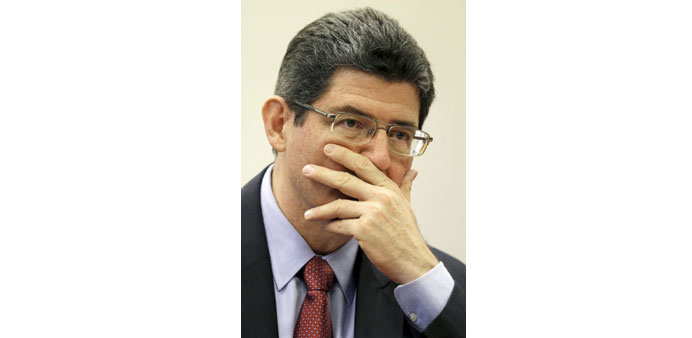
Joaquim