


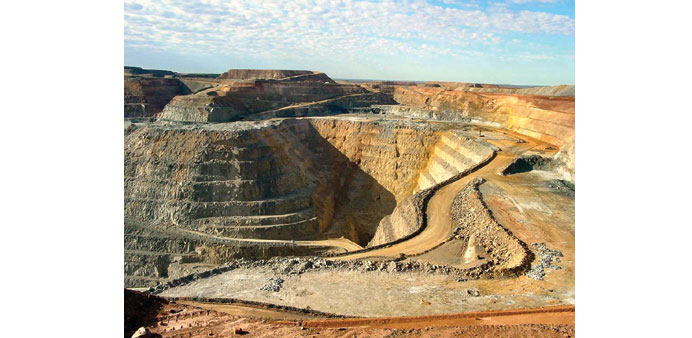
A view of the largest open-pit gold mine Super Pit at Kalgoorlie in Western Australia. The Reserve Bank of Australia has warned that the investment in mining is likely to fall even further than first feared.
Reuters/Sydney
Australia is finding it harder than hoped to get over the hump of a decade-old mining boom as sliding resource prices and sluggish business investment foreshadow another year of substandard growth.
The latest Reuters poll of analysts expects Australia’s A$1.6tn ($1.25tn) of gross domestic product to grow 2.6% in 2015, just up on last year’s 2.5% but a downward revision from January’s forecast of 2.7%.
“Lower commodity prices continue to work through the economy via lower mining investment, weaker mining profits, and slower national income growth,” said Alan Oster, chief economist at National Australia Bank.
“On the positive side, the non-mining economy has strengthened over the past year, helped by a very low cash rate and a lower $A.”
Most painful has been a more than halving in the price of iron ore, Australia’s single biggest export earner. Analysts reckon it could cost the Liberal National government of Tony Abbott as much as A$30bn a year in lost revenue. Treasurer Joe Hockey delivers his fiscal budget in just a few weeks and is almost certain to push out the timing for a return to surplus.
The Reserve Bank of Australia (RBA) has warned the tumble in prices means mining investment is likely to fall even further than first feared, while other business sectors have been reluctant to pick up the slack.
The central bank is doing what it can by cutting interest rates to an historic low of 2.25%, and markets are wagering it will ease again in the next few months.
Still, there are signs rock bottom rates are gaining traction with record levels of new home building spilling over into construction jobs and consumer demand for household goods.
Employment picked up smartly in February and March, pulling the jobless rate down to 6.1% from a 12-year peak of 6.3% and stirring hopes that unemployment might have peaked.
While home prices have become hot enough in Sydney to unsettle regulators, they are also fattening household wealth at a time when wage growth is unusually slight.
Subdued labour costs have combined with lower petrol prices to drag inflation down further than anyone expected just a few months ago. Consumer prices are now forecast to rise 1.8% in 2015, compared to 2.2% in the January poll.
Inflation is seen averaging 2.7% right through 2016, comfortably within the RBA’s long-run target band of 2 to 3% and thus no bar to continued easy policy.
The fortunes spent on boosting mining output are also driving strong growth in export volumes, a trend that will only gather pace as huge projects in liquefied natural gas come on stream. Indeed, net exports accounted for four-fifths of economic growth in 2014.