


AFP/IANS
Colombo
Sri Lanka’s new government suffered its first defection yesterday when the higher education minister quit, saying political reforms had not gone far enough.
Rajiva Wijesinghe said proposed constitutional changes fell short of the promises made by President Maithripala Sirisena before he was elected in
January.
“I do not wish to sit among ministers any longer,” Wijesinghe said in parliament, calling the government’s reform efforts so far “disgraceful”.
“I think it is only correct that I cross the floor of the house,” said Wijesinghe, who was not in the cabinet.
Sirisena came to power promising to scrap the executive presidency and return the country to a parliamentary
democracy.
The new government has drafted a constitutional provision to reduce some of the
president’s executive powers.
But Wijesinghe said that did not go far enough, calling for a complete overhaul including the establishment of independent commissions to run
the police and public services.
Prime Minister Ranil Wickremesinghe, appointed by Sirisena after his election on January 8, heads a minority government that has the support of several opposition
parties.
Wickremesinghe has pledged to dissolve parliament later next month and hold a parliamentary election one year ahead of schedule. The government yesterday formally released a set of proposals for key constitutional reforms which were approved by the cabinet.
The gazette notification on the 19th amendment to the constitution has been published and the public are allowed to submit their concerns within two weeks, the government information department said.
The notification will be open for public recommendations and will be presented to parliament for approval before it
becomes a law.
Ahead of the January election, Sirisena said the president will cease to be the head of government and instead the government will be under the prime minister.
However, the gazette notification notes that the president will be the executive leader, head of state, head of the cabinet and commander-in-chief.
The president will also serve only a five-year term and not of six years as now, and no person who has been twice elected to the office of president shall be qualified thereafter to be elected to such office by the people.
“The president shall be responsible to parliament for the due exercise, performance and discharge of his or her powers, duties and functions under the constitution and any written law, including the law for the time being relating to public security,” the gazette notification added.
The proposals were made following talks between the president and his coalition partners, including the United National Party (UNP) led by Prime Minister
Ranil Wickremesinghe.
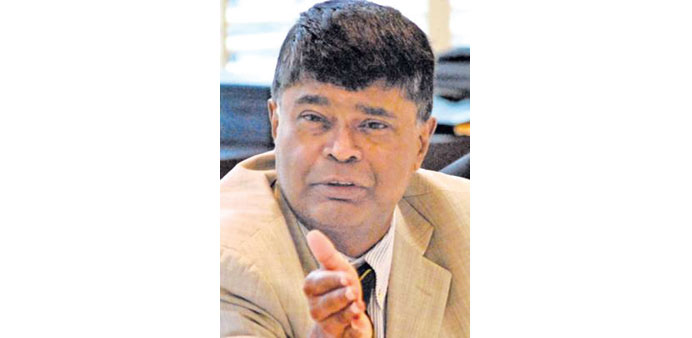
Rajiva Wijesinghe: u201cI do not wish to sit among ministers any longer.u201d