


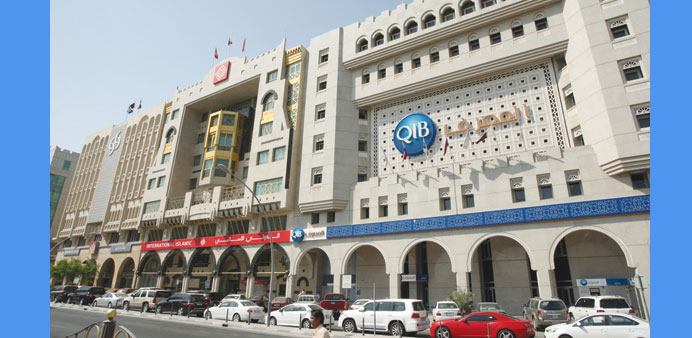
With aggregate loan growth principally led by personal lending, loans abroad and real estate lending, there could be scope for Qatari banks to play a greater role in major projects, says IIF. PICTURE: NASAR T K
By Santhosh V Perumal/Business Reporter
Qatar’s banking sector, whose profitability is strong amid lower capital adequacy, can add value to the country’s infrastructure projects with its prudent monitoring and due diligence, according to Institute of International Finance (IIF).
Domestic bank credit has not been the main source of funding for major infrastructure projects, although authorities are looking for avenues for greater involvement by banks, the Washington-based IIF said in its report that was released on Sunday at its Spring Membership meeting.
“With aggregate loan growth principally led by personal lending, loans abroad and real estate lending, there could be scope for the banks to play a greater role in major projects, particularly against the backdrop of lower energy prices,” it said.
Domestic bank participation could be of added value since one of the main functions of lending institutions is “monitoring and conducting due diligence during the lending process”, it said.
The country’s banking sector, whose return of equity was estimated at 16.5% at the end of 2014, saw non-performing loans at a low of 1.7% although it reflected “sizeable” risk-free government-related lending and strong growth in the denominator.
“With increased restraint in borrowing by public sector companies and a shift in focus of bank lending to the private sector, there has been a rapid rise in risk-weighted assets of banks which has caused the capital adequacy ratio in the sector to come down to 12.8% in 2014, from 16% a year earlier,” IIF said.
The capital adequacy has consistently fallen from as high as 20% in 2011 and 19% in 2012.
Credit growth is still in high digits driven by loans to the private sector, but has eased sharply due to slowdown in the government-related credit following greater scrutiny of great borrowing, it said.
“The introduction of a100% limit on loans to deposits (LTD), effective over a period of three years and which does not take into account other long term funding, is expected to also limit external funding,” IIF said.
Although only some banks are above the LTD threshold, it said increased competition for deposits could result, pushing up interest rates, it said.
At the same time, there could be implications in longer term capacity or an increase in maturity mismatches, it added.
The recent decline in government deposits, which are typically lower cost due to debt service payments and settlement of state obligations could create competition for private sector deposits with the result of margins erosion at banks, it cautioned.
Public sector deposits comprised about 36.5% of total deposits in January, down from 46% in October 2013, it said.
While public borrowing also contracted, rising credit to the private sector pushed up LTD, it said, adding “even if public borrowing is curtailed at the same time as a draw-down on deposits and LTD impact were neutral, this would mean slower banking sector growth.”