


Bloomberg/Johannesburg
Sasol Ltd, the biggest maker of liquid fuels from coal, plans to conserve as much as $4.2bn in cash in addition to its cost-saving strategy as an oil drop drags down prices of its products.
The company has set a “cash-conservation target range” of 30bn rand ($2.5bn) to 50bn rand over 30 months, using December 31 as a baseline, the Johannesburg-based company said in a statement yesterday. This will supplement another programme that entails cost savings of at least 4.3bn rand annually from July 2017.
“In the near term, we expect tough trading conditions to prevail for the remainder of calendar year 2015,” group financial controller Paul Victor said. The company expects average Brent crude-oil prices to be at least 30% lower during the second half of the financial year compared with the first and sees the rand-dollar rate being affected by quantitative easing in Europe.
Sasol, like other fuel producers such as Qatar Petroleum and Royal Dutch Shell, is conserving costs after oil fell more than 50% over the last six months. The company, whose revenue is linked to the dollar price of oil, delayed plans to build a US gas-to-liquids plant, the nation’s first, that would have cost as much as $14bn, it said on January 28.
It’s going ahead with construction of an $8.1bn plant in the US that will convert natural gas into plastics and other products in the chemical industry’s largest bet on shale gas.
The cash-conservation measures will include as much as 22bn rand of “capital portfolio phasing and reductions,” 12bn rand of capital structuring, working-capital improvements of as much as 9bn rand and further cash-cost reductions ranging from 4bn rand to 7bn rand, it said.
Sasol cut capital-expenditure plans for 2015 to 45bn rand from 50bn rand announced on September 8, and maintained 2016 spending plans at 65bn rand and plans to spend 60bn rand in 2017, it said. The producer raised the amount it plans to save from its performance-enhancement programme to at least 4.3bn rand by the end of June next year.
By December 31, almost 1,500 jobs were cut through voluntary separations and early retirements, it said. The company is looking to trim an additional 200 positions in response to the low-oil-price measures, chief executive officer David Constable said in a results presentation in Johannesburg.
The range of additional savings can be adapted depending on the direction of oil prices, Constable said in an interview. “If it starts to feather up and we see some stability then we can move off” the 50bn-rand target to a lower amount, he said.
Sasol said first-half profit rose 6.2% after a decline in the rand-dollar exchange rate countered the drop in crude oil.
Earnings excluding one-time items advanced to 19.5bn rand, or 32 rand a share in the six months through December, from 18.4bn rand or 30.19 rand a share a year earlier, the company said. Sasol declared an interim dividend of 7 rand a share, from 8 rand a year earlier, after changing its policy last month.
Sasol, whose expenses are mostly in rand, benefits from the currency’s decline against the dollar. The rand traded at an average of 10.9955 to the dollar in the first half, 8.4% weaker than the mean a year earlier.
Sales volumes of liquid fuels from Sasol’s energy business in southern Africa rose 3%.
“The increased cost of production resulting from higher- than-inflationary increases in feedstock and utilities, as well as the reduction in the basic fuel price on the back of lower international crude oil prices, resulted in an 18% negative impact on our gross margin,” it said.
It sees liquid-fuels product volumes in southern Africa of about 59mn barrels for the year through June.
The US gas-to-liquids plant is “on the shelf” for now as Sasol looks at other projects, according to Constable.
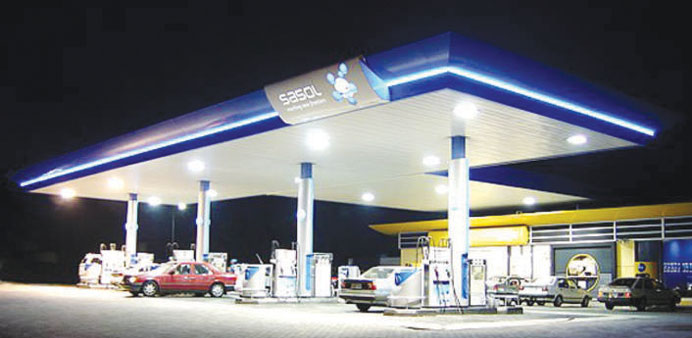
Sasol is conserving costs after oil fell more than 50% over the last six months