


DPA
Copenhagen
People who think only of licorice as a candy have not been around northern Europe lately. In many supermarkets in Scandinavia, powdered licorice is found on the spice shelves between cinnamon and ground paprika while at the butcher’s, a licorice-spiced salami takes prominent place in the display case.
In the evenings at the tavern, a licorice beer is just what people in Scandinavia order to round out their day. Even prize-winning restaurant chefs swear by licorice.
But there is hardly any folk who have such a loving relationship with their licorice as the Danes. Nobody has a ready explanation of why this is so. “It is simply a tradition here,” a woman named Anne says in Copenhagen.
Like hundreds of other licorice fans, she attended a weekend licorice festival in the Danish capital to stay atop adventurous tastes and trends. There is licorice in powder form to spice up a cocktail while those wishing to live really dangerously try dishes of veal or smoked goat cheese topped with licorice. Hobby pastry chefs, meanwhile, are busy experimenting with licorice in their creations.
“I do think that only the Dutch actually eat more licorice than we Danes,” Peter Husted Sylvest said with a note of pride in his voice.
Husted Sylvest is sales manager of Lakrids by Johan Buelow, an online shop specialising in licorice that has made millions of euros even though it was founded barely eight years ago by the 30-year-old Buelow.
His vision was born in the kitchen of his mother in the small island village of Svaneke. Today, it is not only the Danes who are crazy about his products. Each day, 2.5 tons of licorice leave his factory, most of it in the form of small, chocolate-covered licorice balls.
But licorice is not restricted to the sweet-tooth set. How about some licorice with your bacon? Or your Gorgonzola cheese? Or a chilli dish?
“Licorice is a spice like any other. There’s no need to be afraid of it,” said Tine Drachmann Johns, a cook serving up dishes of veal, apple chutney and licorice to visitors at the licorice festival.
At the booth next to hers, visitors are trying a dish of red beets along with licorice-spiced smoked goat cheese.
Drachmann Johns said the food industry in Denmark has been working with licorice for about 15 years but it has only been during the past five or six years that consumers have really been infected by licorice fever.
Further evidence of the trend came in a report by Danish television that found licorice honey makes up one-tenth of honey sales in Denmark. Likewise, four out of every 10 bottles of ketchup sold by the Karlsens Kraeuter company contain licorice. The same goes for every fifth jar of marmalade.
According to some Danes, the time is ripe to educate the wider world about licorice. If offered licorice or chocolate, most people would go for the latter, but Husted Sylvest said this is only so because they did not know “all that licorice can be and how it tastes.”
He pointed out that there is an entire range of tastes in licorice.
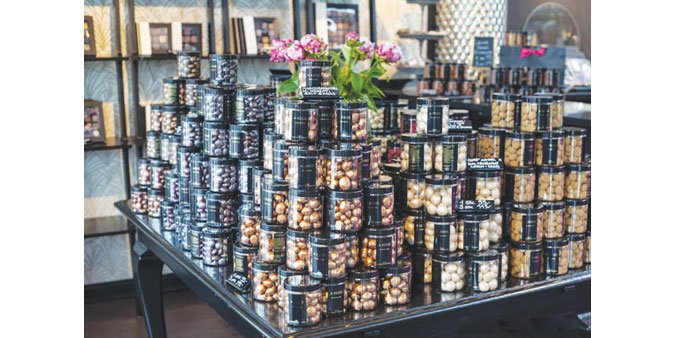
Licorice in Copenhagen.