


By Mizan Rahman/Dhaka
Authorities at the Dhaka Central Jail yesterday afternoon read out a death warrant issued by the International Crimes Tribunal to condemned 1971 war criminal Muhammad Kamaruzzaman, who is also assistant secretary of the Jamaat-e-Islami.
“I have read out the death warrant to Kamaruzzaman at around 2:30pm. He wanted to talk to his lawyers to decide on his legal recourse,” said Farman Ali, senior jail superintendent at the Dhaka Central Jail.
Earlier in the day, a tribunal in Dhaka issued the death warrant against the Jamaat-e-Islami leader in a war crimes case.
The International Crimes Tribunal-2 issued the warrant after receiving the full text of the supreme court verdict that upheld the death penalty of Kamaruzzaman for his crimes against humanity during 1971 liberation war.
The copies of the death warrant, wrapped in red cloth, were sent to the Dhaka district magistrate, the prison authorities and secretaries of the home and law ministries, Mustafizur Rahman, registrar of the ICT, told reporters at a briefing.
ICT acting deputy registrar Aftab-uz-Zaman left the office at 1:03pm to deliver the copies.
The apex court on Wednesday released the full verdict on Kamaruzzaman’s appeal after all the four judges, who had delivered the verdict on November 3 last year by a majority decision, signed the 577-page judgment.
The judges are chief justice SK Sinha, justice Md Abdul Wahhab Miah, justice Hasan Foez Siddique and justice AHM Shamsuddin Choudhury Manik.
With this development, Kamaruzzaman has now 15 days to file a review petition with the supreme court on its verdict that has upheld his death penalty for war crimes. The countdown, however, started from Wednesday, said attorney general Mahbubey Alam on the same day.
On May 9, 2013, the tribunal-2 found Kamaruzzaman guilty of five out of the seven charges brought against him and sentenced him to death on two charges, life term on two and 10 years’ jail on another. He was acquitted of two counts of war crimes.
He challenged this verdict with the supreme court, which on November 3 last year upheld the death penalty for the mass killings at Sohagpur in Sherpur district on July 25, 1971.
Justice SK Sinha, now the chief justice, headed the four-member supreme court bench.
The supreme court has so far completed the trials of two war crimes accused, while the trials of seven others are pending with it.
Kamaruzzaman’s counsel Khandaker Mahbub Hossain said his client cannot be executed until the review petition, if filed, is not disposed of by the supreme court. The government has to wait 15 days to execute Kamaruzzaman even if he does not file the review petition, said Hossain while addressing a press conference at the Supreme Court Bar Association auditorium yesterday afternoon.
The counsel added that they have not received the certified copy of the supreme court verdict although they have applied to the authorities for a copy.
If the supreme court rejects the review petition, Kamaruzzaman will get the opportunity to petition the president for mercy. If rejected, then the government can execute Kamaruzzaman, said Hossain.
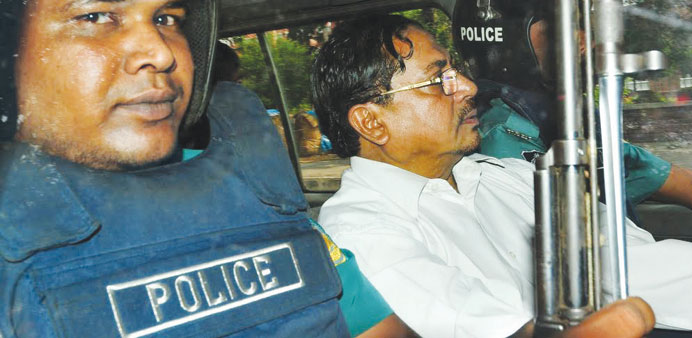
Muhammad Kamaruzzaman