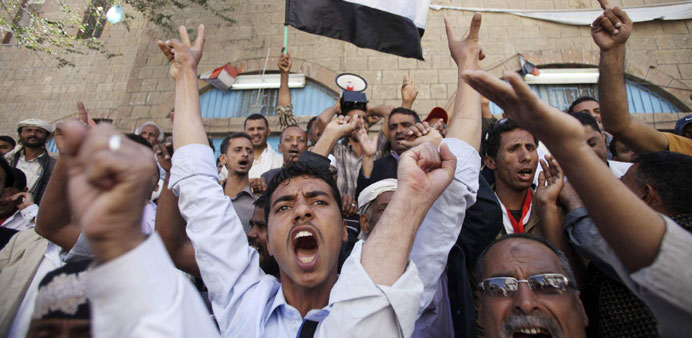
Protesters shouting slogans against the Shia Houthi movement in the southwestern city of Taiz yesterday.
AFP/Sanaa
A Shia militia that has seized Sanaa defiantly rejected yesterday a UN call to cede power, stoking tensions after Yemen’s Gulf neighbours appealed to the Security Council to act forcefully.
The UN Security Council, in a resolution adopted unanimously on Sunday, urged the militia, knows as Houthis, to relinquish power, release President Abd-Rabbu Mansour Hadi along with other officials, and to negotiate in “good faith”. It raised the possibility of sanctions.
In response yesterday, the Houthis told the powerful UN body to “respect the will and sovereignty of the Yemeni people, and to be accurate and objective”.
They also told the Security Council “not to follow the lead of regional powers that aim tirelessly to eliminate the will of the Yemeni people in a flagrant violation of international conventions that criminalise meddling in internal affairs”.
The statement from the “Supreme Revolutionary Committee” was apparently referring to the Gulf states which had demanded tough UN action.
“The revolution does not target our brothers in the Gulf Co-operation Council; not now, nor in the future,” said the statement.
On February 6, the Houthis ousted the government and dissolved parliament, tightening their grip after President Hadi offered to resign in protest at their advance.
Prime Minister Khalid Bahah tendered his resignation at the same time, and both have been held under effective house arrest by the Houthis ever since.
On Monday, the UN envoy to Yemen, Jamal Benomar, vowed to press for their release, after he visited Hadi at his besieged house in Sanaa.
“I assured him that we will continue our efforts to lift the house arrest imposed on him and the Prime Minister” Khalid Bahah, Benomar said in a statement.
The information minister in Bahah’s resigned government, Nadia Sakkaf, said meanwhile that Hadi needed to travel abroad “immediately” for medical treatment.