


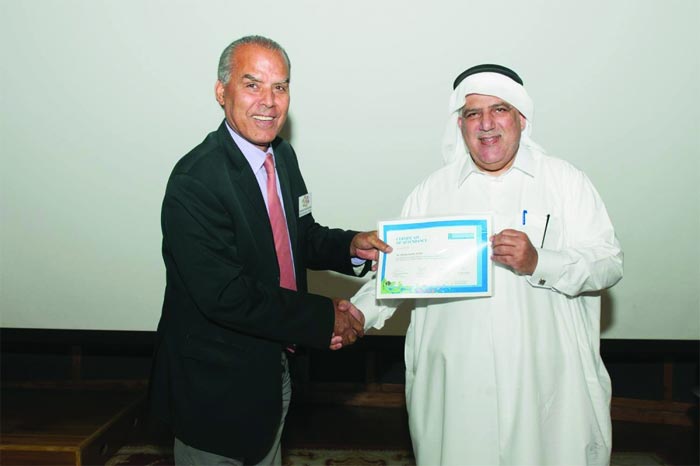
Dr Boulenouar Mesraoua, senior consultant neurologist at HMC and associate professor of clinical neurology at Weill Cornell Medical College-Qatar, shaking hands with Dr Hassan al-Hail after presenting him with a certificate.
Doha
About 3,000 children with epilepsy in Qatar are being cared for by Hamad Medical Corporation’s paediatric neurology service, the only centre in Qatar providing tertiary care for children with epilepsy, an HMC official has said.
HMC held a series of events to raise awareness about epilepsy on the occasion of first International Epilepsy Day which took place last week.
Dr Khalid Ibrahim, head of the paediatric neurology division at Hamad General Hospital, said: “A very important aspect of epilepsy is to manage the seizures or convulsions when they happen. Seizures are unpredictable; they can happen all of a sudden, and can happen anywhere. There are about 3,000 children with epilepsy being given care at HMC."
Dr Hassan al-Hail, senior consultant neurologist at HMC and president of the Qatar Chapter of the International Epilepsy Day, said it was a major event celebrated in 138 countries in which the International Bureau for Epilepsy and the International League against Epilepsy are represented and was aimed at increasing epilepsy awareness in every region of the world.
Epilepsy is a medical condition that affects the nervous system, causing the affected person to have recurring seizures. It affects about 1% of Qatar’s population or 20,000 people per 2mn.
In Qatar, most cases of epilepsy have unknown causes or are due to a brain injury, usually due to a road accident or a fall. There are also cases of epilepsy linked to premature birth, complications during pregnancy and infections. Inherited epilepsy is very rare.
Epilepsy can be controlled with the right medical treatment. “With proper medical care and certain precautions to reduce health risks, people with epilepsy should be able to live healthy, social and productive lives,” said Dr al-Hail.
He also stressed the importance of community support in improving the quality of life for people living with epilepsy and in encouraging others who may have undiagnosed epilepsy to come forward and get the proper medical treatment without fear of social stigma.