


By Catherine Valente
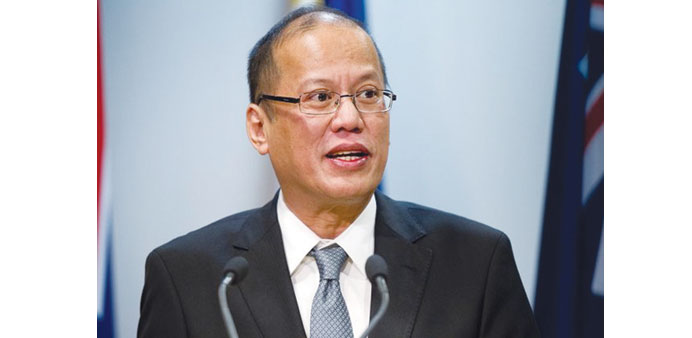
President Benigno Aquino has not given up on seeking emergency powers from Congress to address the energy crisis, Malacanang said yesterday.
But Presidential Communications Secretary Herminio Coloma Jr made it clear that such powers are not connected with initiatives to open the Constitution to political amendments that would pave the way for allowing the president to run for a second term.
“For the malicious, this has nothing to do with the charter change some quarters are pushing,” Coloma said in a radio interview.
He added that they were aware of the urgency of resolving the energy crisis and had looked into the options suggested by Energy Secretary Jericho Petilla.
Petilla “already said the president is looking for options, where industry players can help,” Coloma said.
“We assure the public that the government is doing everything to make sure there is a sufficient supply of electricity,” he added.
Last week, Petilla reported that business establishments were lukewarm to his Interruptible Load Programme, where large power users will be paid if they agree to go off the grid and use their generator sets during peak load hours.
He said he was only able to get a commitment of 27 megawatts (MW) from the private sector although Manila Electric Co. or Meralco reported last May that mall owners have committed a total of 110 megawatts to the programme.
But Palace spokesman Edwin Lacierda was non-committal when reminded that Aquino only has until the end of the month to decide whether to implement emergency measures to address the power crisis that was predicted by experts as early as last year.
“It is still among the measures being eyed by the president among other possible suggestions given the circumstances, but as to the final decision of the president, let’s just wait for him to issue a directive,” Lacierda said.
The idea to grant emergency powers to the president was suggested by at least nine local and foreign chambers of commerce and even labour groups joined the call because of effects of a power crisis on job generation.
Labour groups also raised the power situation during their pre-Labour Day dialogue with Aquino in April and the president promised that there “will be good news in a couple of days” but there has been no word since.
Last June 18, Petilla convened a task force under the Department of Energy comprised of several stakeholders but the labour groups did not want to join the task force because of the supposed lack of co-ordination among stakeholders.
In July, Petilla, who had repeatedly dodged suggestions to declare a state of emergency in the power sector, finally admitted that Luzon will likely face a power shortfall of between 400 megawatts and 500 MW by summer next year.
He said at least six power plants, capable of producing 400 MW, will likely be online by summer, but that will not be sufficient because other plants are also expected to go off-line for maintenance.
Petilla agreed with the call of the private sector that it was time for Aquino to declare a state of emergency in the power industry so that he can seek remedies.
The president, however, has not acted on the proposal.
But Lacierda noted that Aquino mentioned the matter in his State of the Nation address and he instructed Petilla to discuss the matter with the Energy Regulatory Commission, the congressional oversight committee and other stakeholders.
“One thing that we want to emphasise is that we are going to pro-actively handle the situation. That’s why we’re recognising all the concerns of the power sector, as well as the stakeholders, including the citizens,” he said.
Opposition lawmakers, however, suspect that the administration is concocting a power crisis in 2015 to justify emergency powers for the president.
Representatives Neri Colmenares and Carlos Zarate of Bayan Muna said as of 2013, the installed capacity for the Luzon is 12,790 MW with dependable capacity of 11,469 MW, based on Department on Energy figures. “The peak demand for the grid is just at 8,700 MW plus (this happens during summer, May in particular) and the portion of Meralco in that is at 6,121 MW (based on 2014 figures),” the two said in a statement yesterday.
Deducting dependable capacity from peak demand, there should have been allowance for reserves amounting to 2,700 MW, which is more than the 400 MW deficit that Petilla claims, Colmenares said.
House Committee on Energy chairman Reynaldo Umali agreed with the assessment.
“That’s what I’ve been saying ever since the issue broke out,” Umali, who is from the Liberal Party and is Oriental Mindoro’s Second District representative, said in a text message.
Zarate dismissed the power crisis as “nothing but a bogey” to justify emergency powers.
There is enough capacity to cover the supposed shortfall in the energy supply for summer of 2015, he said.
Colmenares said even if there is a power shortfall, the government can tap state-owned power plants like the Malaya power plant and the Sucat power plant.
“This emergency power is even probably designed so that Malacanang can dip its fingers again on the Malampaya fund, the spending of which was already restricted by the November 2013 decision of the Supreme Court,” Zarate said.