


Reuters
HH the Emir Sheikh Tamim bin Hamad al-Thani has issued a law providing for foreign investors to own up to 49% of listed Qatari companies, part of reforms to expand the stock market and develop the financial industry.
“The law stipulates that non-Qatari investors are allowed to own no more than 49% of the shares of Qatari shareholding companies listed on the Qatar (Stock) Exchange,” the Qatar News Agency (QNA) said yesterday.
Originally announced late May, the law also lets foreigners own more than 49% of a firm in special cases if they obtain approval from the Qatari cabinet.
In another market-opening step, citizens of the six-nation Gulf Co-operation Council will be treated as Qatari citizens for the purpose of owning firms listed on the Qatar Exchange. This will provide more room for non-GCC foreigners to own shares.
Currently, listed Qatari firms impose ceilings on combined foreign ownership that are usually no more than 25%, though some have already raised their ceilings above that level.
Al Khaliji Commercial Bank said in February, for example, that its shareholders had approved an increase in its foreign ownership ceiling to 49%.
It was not immediately clear from the QNA report whether all Qatari firms would now be obliged to raise their ceilings to 49%, or how much time they would have to do so. Officials could not be reached to clarify the issue yesterday.
“We have not been informed by the regulators on how this law will be implemented. So far we don’t know if it will be mandatory to raise investment to 49%,” said a Western bank executive, declining to be named.
QNA said companies would need the approval of the Ministry of Economy and Commerce for increases to their foreign ownership ceilings in their articles of association. This may mean the ministry could specify ceilings below 49% in some cases.
At present, foreign investment in most listed Qatari companies is not near their current ceilings.
The free floats of many major Qatari firms dependent on large stakes held by the government; for example the State of Qatar owns 43% of QNB, according to Thomson Reuters data.
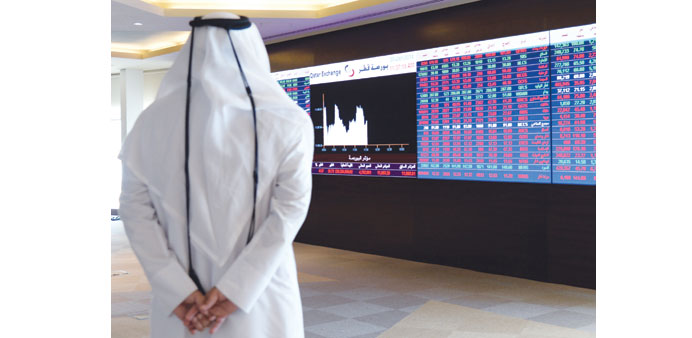
Nevertheless, the reform may help in the long run to attract more foreign money into the Qatar Stock Exchange, which with a capitalisation of $193bn is the second largest bourse in the GCC, after Saudi Arabia.
Qatar’s market has risen strongly this year on the back of its upgrade in May by international index compiler MSCI to emerging market status from frontier market status. The main index is up 27% year-to-date. “It’s a step in the right direction, but it will have to be backed up by good performance from companies in order to attract foreign investment,” one wealth manager in the Gulf said of the reform. “There should be limited impact from the law in the short term due to liquidity issues and limited numbers of shares available.”
Saudi Arabia, which has a market nearly three times the size of Qatar’s, announced last month that it would open its bourse to direct investment by foreign institutions in the first half of next year.