


AFP/Hiroshima
Tens of thousands of people gathered for peace ceremonies in Hiroshima yesterday, marking the 69th anniversary of the US atomic bombing of the city, as anti-nuclear sentiment runs high in Japan.
Bells tolled as ageing survivors, relatives, government officials and foreign delegates observed a moment of silence in the rain at 8.15am local time (2315 GMT Tuesday), when the detonation turned the western Japanese city into an inferno.
People attending yesterday’s ceremony placed flowers in front of the cenotaph at Peace Memorial Park in downtown Hiroshima.
The city’s mayor Kazumi Matsui recalled the grim memories of one survivor at a ceremony attended by Prime Minister Shinzo Abe and US ambassador to Japan Caroline Kennedy.
The survivor, a 15-year-old pupil at the time, remembered hearing “voices from the brink of death” begging for “water, please”.
“The pleas were from younger students,” the mayor said, recounting the survivor’s grisly description of “their badly burned, grotesquely swollen faces, eyebrows and eyelashes singed off, school uniforms in ragged tatters”.
Many survivors - known in Japan as “hibakusha” - feel profound guilt over living through the attack, Matsui said.
But “people who rarely talked about the past because of their ghastly experiences are now, in old age, starting to open up”, he added.
Shigeji Yonekura, a 81-year-old Hiroshima survivor, told AFP: “It’s sad to see my fellow hibakusha die year after year, but I want to keep telling young people about my horrific experience for as long as I live.”
An American B-29 bomber named Enola Gay dropped an atomic bomb on Hiroshima on August 6, 1945, in one of the final chapters of World War II. It had killed an estimated 140,000 by December that year.
On August 9, the port city of Nagasaki was also bombed, killing an estimated 70,000 people. Japan surrendered days later - on August 15, 1945 - bringing the war to a close.
Opinion remains divided over whether the twin attacks were justified. While some historians say that it prevented many more casualties in a planned land invasion, critics have said the attacks were not necessary to end the war, arguing that Japan was anyway heading for imminent defeat.
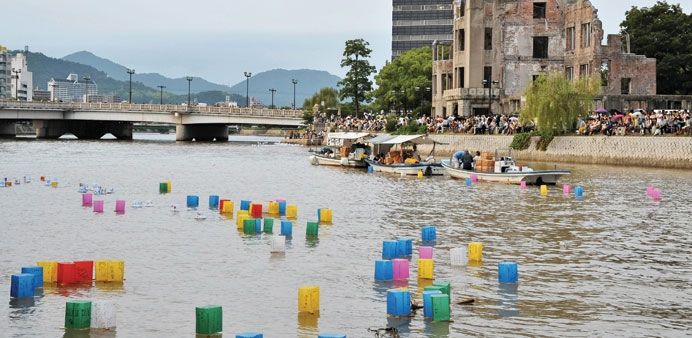
Paper lanterns float on the Motoyasu River in front of the Atomic Bomb Dome on the 69th anniversary of the atomic bombing in Hiroshima yesterday.