


|
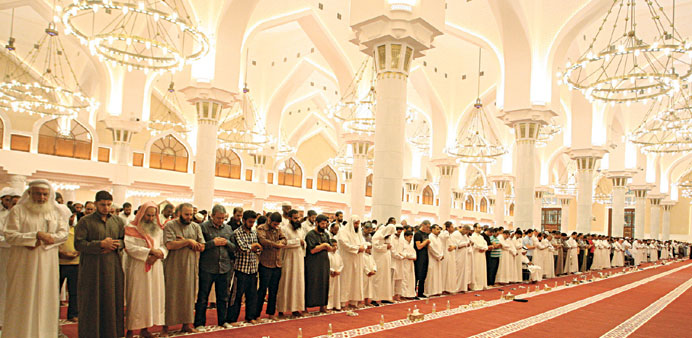
This year the holy month of Ramadan started on June 29 in Qatar with the sighting of the new crescent moon (hilal) and will continue until the crescent moon is sighted again, and Eid al-Fitr is announced, on or around July 28. Eid al-Fitr, the festivity of the breaking of the fast, is a public holiday in Qatar. |
Subsequently the festival of sacrifice, or Eid al-Adha, will be celebrated with another public holiday.
This year Eid al-Adha is expected to start on or around the October 4. Arafat or Haj day is celebrated the day before Eid al-Adha, but in Qatar it is not always a public holiday.
This article reflects on the changes which the holy month of Ramadan has on Qatar working practices and the public holidays of Eid al-Fitr and Eid al-Adha.
For Muslims, Ramadan is a time for spiritual reflection, improvement and increased devotion and wisdom. One way in which reflection, improvement, devotion and wisdom is sought is through fasting.
Fasting during Ramadan is one of the five pillars of Islam, the other four pillars are, belief, worship (salat), charitable giving (zakat) and Haj, the pilgrimage to Makkah which all Muslims should perform if they are able to once in their lives.
Muslims fast during Ramadan between sunrise and sunset. In Qatar fasting is promoted and strictly observed with many restaurants and food outlets remaining closed during the period during which fasting takes place. Some hotel restaurants remain open for hotel guests and others.
Children and other Muslims who are travelling or otherwise unwell are not required to fast. However, many do and/or make up for the days during which they did not fast at a later date when they are capable of fasting.
During Ramadan, the majority of Qatar employees who work in the private sector will work two hours less each day as required by Qatar laws and regulations. The normal working day of eight hours, or 48 hours a week, will be reduced to six hours, or 36 hours a week, on the basis of a six-day week.
Employees may still work two hours per day overtime as necessary. The usual overtime rates should apply during Ramadan.
Employees who would not normally get paid overtime because they are in a position of responsibility or otherwise will not be paid overtime during Ramadan. Employers and employees which operate and work, respectively, a five day week will need to reduce their working hours accordingly.
It is important to note that reduced working hours are for all employees whether or not they are Muslim and/or fasting during Ramadan.
Compliance with Qatar laws and regulations during Ramadan in relation to reduced working hours is promoted and observed in the same way as it is for fasting. The Labour Department of the Ministry of Labour and Social Affairs is the pertinent government agency with regulation and enforcement responsibility and is the place for employers to refer their questions in relation to their Ramadan working policies and procedures in order to confirm that such policies and procedures are compliant. In particular the hours for employees working shifts should be discussed and agreed.
The Qatar Financial Centre (QFC) Employment Regulations which govern the employment of all individuals employed by the Qatar Finance Centre Authority, QFC Regulatory Authority and the entities licensed and regulated by those authorities provide for reduced working hours for fasting employees only. All other employees will work normal hours, whatever those hours are and have been agreed to be between the employer and the employee. Where employees fast and work normal hours they will be permitted the usual rest breaks.
Ramadan working hours for government or public sector employees are set by the Minister or his authorised representative in the respective Qatar ministries, quasi-government entities and other government agencies. Working hours will usually be confirmed shortly in advance of Ramadan.
The start date and duration of Eid holidays may differ depending on whether an employee is employed in accordance with the provisions of the Qatar Labour Law, or other regulations such as the QFC Employment Regulations, which govern the employment of the majority of private sector employees or the Human Resources Law which governs the employment of public sector employees.
There are other such laws and regulations which govern the start date and duration of Eid holidays, but these are not referred to in this article.
The Qatar Labour Law provides for a three-day public holiday for each of Eid al-Fitr and Eid al-Adha. In addition the QFC has in the past announced a long Eid holiday for Eid al-Adha which includes Ararfat Day. This additional day is one of the three “floating” public holidays referred to in the Qatari Labour law.
The Human Resources Law provides that public holidays amongst other things will be determined by a Council of Ministers’ resolution. Generally employees whose employment is subject to the Human Resources Law enjoy longer holidays than other employees in Qatar.
Eid holidays in Qatar are officially announced on or shortly before they are due to begin. This year public sector holidays for Eid al-Fitr are expected to start on July 23 and finish when the ministries reopen on August 3, but these dates could change as the holiday approaches.
Note: all Qatari Laws (save for those issued by, eg. the QFC to regulate its own business), are issued in Arabic and there are no official translations, therefore for the purposes of drafting this article Clyde & Co LLP has used its own translation and interpreted the same in the context of Qatari laws, regulation and current market practice.
l Should you have any questions in connection with this article or the legal issues it covers, please contact Sara Khoja of Clyde & Co at [email protected] or Emma Higham of Clyde & Co LLP at [email protected].