


|
Importers and clearing agents now benefit from an “enhanced delivery system” at the fully automated state-of-the-art cargo terminal at the Hamad International Airport, the airline’s cargo division has said. |
In response to a Gulf Times query, Qatar Airways Chief Officer Cargo, Ulrich Ogiermann said, “Qatar Airways Cargo has completed the transition from a manually handled cargo environment to a fully automated state-of-the-art cargo terminal.
“We initially faced some challenges as we adapted to the new system, but those have now been addressed and the step-change from the original manual system has been significant. All importers and clearing agents now benefit from an enhanced delivery system, which provides major improvements over the previous operation.”
Earlier, some importers and clearing agents had complained that there was some delay in cargo clearance at the new airport, which they said, “landed us in difficulties”.
An importer had earlier told Gulf Times, the delay followed transfer of cargo operations from DIA to Hamad International Airport.
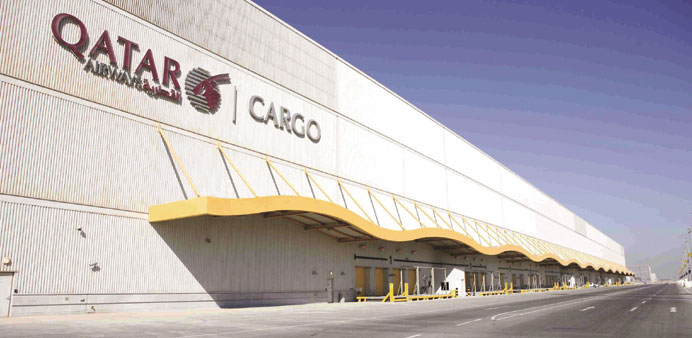
Boasting one of the most sophisticated cargo terminals in the industry, HIA is a platform for the expanding global freight business, providing seamless and efficient services to customers and cargo carriers around the world.
The new cargo handling facility promises to set new standards of service and quality not only in the GCC region, but globally.
The new cargo terminal at HIA has been built over 77,000sqm across two levels.
Located in the midfield area, HIA’s cargo terminal will be capable of simultaneously handling 5,700 shipments and up to 1.4mn tonnes of cargo annually, Gulf Times data show.
Upon completion of the second terminal, capacity for processing will increase to 2.5mn tonnes of cargo, making it almost the largest cargo terminal in the world.
The two-floor cargo facility incorporates warehouse spaces, Automated Systems / Retrieval Systems (ARAS) mezzanine, offices and shops.
The split-level facility covers 55,000 sqm, boasts 11 wide-body aircraft standing bays, 42 loading docks and 31 landside truck-loading facilities.
With advanced scanning technology, it will ensure the complete safety and security of the facility, its staff and cargo.