


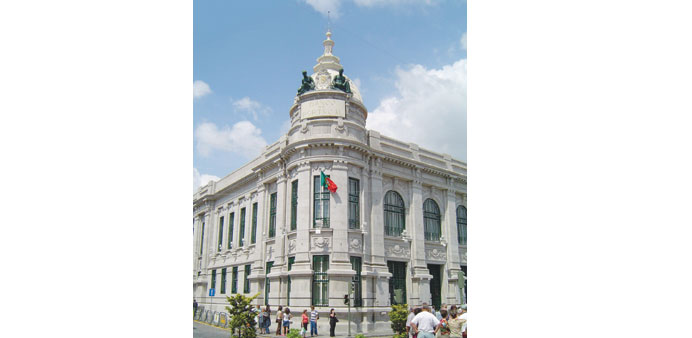
The Bank of Portugal team has met with representatives of the Espirito Santo family that has controlled BES for decades to discuss their future role in Portugal’s biggest listed bank
Reuters
he Bank of Portugal wants the chief executive of Banco Espirito Santo (BES) to quit, three people familiar with the matter said, following the discovery of financial irregularities at a holding company that owns a stake in BES.
A central bank team met with representatives of the Espirito Santo family that has controlled BES for decades to discuss their future role in Portugal’s biggest listed bank. Family member Ricardo Espirito Santo Salgado is the bank’s CEO.
“There was a meeting at the Bank of Portugal and there are likely to be some changes in the bank’s management, including the departure of the CEO,” one source said.
Local media had reported that Ricardo Espirito Santo Salgado was likely to announce his resignation on Friday.
The country’s financial market regulator CMVM suspended trading in BES shares on Friday pending clarification from the bank over the reports.
BES and representatives of the Espirito Santo family could not immediately be reached for comment.
The family is Portugal’s only banking dynasty, its origins dating back to a money-changing business set up in 1869.
It lost control of BES this month when the bank sold €1bn of new shares to strengthen its capital base ahead of European Central Bank stress tests.
The Espirito Santos still control many other assets in the country through a complex array of holding companies. Members of the family sit on several Portuguese company boards.
This month’s capital increase drew strong investor demand even though the sale prospectus issued in May spoke of “material irregularities” involving Espirito Santo International (ESI), a Luxembourg-based holding company through which the Espirito Santo family holds part of its stake in the bank.
The prospectus said the irregularities affected the “completeness and trustworthiness” of ESI’s accounts.
BES has said it is insulated against the problems at ESI.