


|
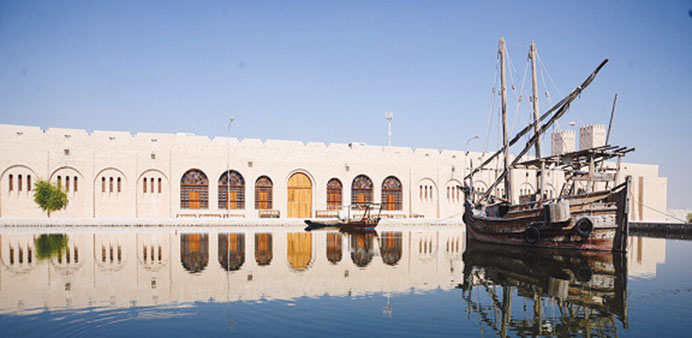
Top international Islamic manuscript scholars came together at Sheikh Faisal Museum in Doha to review and validate its extensive and valuable manuscript and calligraphy collections. |
Among the experts were Dr Nabil Safwat (art historian from Dubai), Mahmoud Zaki (the Institute of Arabic Manuscripts and Alecso, Arab League), Professor Paul Hepworth (book conservator from Istanbul), Karin Scheper (book conservator at the University of Leiden), and Dr Nourane Ben Azzuna (assistant professor in art history, University of Vienna).
The collection at Sheikh Faisal Museum, the largest private museum in the region, includes a number of manuscripts that have been obtained from many Arab and Islamic countries.
These manuscripts are wide-ranging in terms of their provenance, subject matter and form.
The prevailing notion about Arabic manuscripts is that they basically focus on religion and faith-related subjects. This is because these are the core subjects in much of Islamic literature found in national and private libraries including those in mosques, zawiya and religious schools as well as the great old library of Timbuktu.
Contrary to this notion, a number of the manuscripts in the Sheikh Faisal bin Qassim al-Thani’s collection cover many other topics such as science, philosophy as well as spiritual content.
Some of these take the form of a whole series or a volume like the Canon of Medicine by Avicenna and Tazkirat Ouli al-Albab by Dawoud al-Antaki (No7445) in pharmacology which is full of detailed information on botany classification, diseases and treatment.
One of the manuscripts, for example, is a complete 18th century Sufism work by al-Asharani entitled “Albaher almawroud”. It shows a high level of sophistication in terms of the kind of paper used and the elegant calligraphy.
Then there are other unique Qur’anic manuscripts which show a range of Arabic calligraphy styles in addition to different Indian, Persian and Turkish decorations that use many valuable materials such as exquisite paper, precious stones and gilded pages.
Professor Hepworth said the participation in the practical session at the museum made a real contribution to the group. The scholars were shown some of the highlights of the collection, all beautifully illustrated in dramatic colours, with golden floral decorations on the pages and margins filled with medals and motifs.
Iranian style manuscripts from the Safavid artists in India in purple, red and gold also featured in the visit.
Other exquisite manuscripts that were highlighted included an 18th century Qur’an from India in gold, red and blue ink with opaque pigments and patterns.
The collection on display also included a small illuminated 17th century manuscript from Istanbul that contains a famous poem in honour of the Prophet Muhammad and is popularly known as ‘Qasidat Al Burdah’ (the Poem of the Cloak), composed by Staraf al-Din Mohamed al-Busiri (died 694 HD/ 1294 CE).
Karin Scheper, conservator at the University of Leiden, said: “The collection reflects how Islamic art decoration focuses on patterns, illumination and calligraphy rather than figures. This manuscript included invocations and verses from the Qur’an for pilgrims, from Turkey in the 19th century, that deal principally with the subject of Islam and the symbolic conception of faith, with content including invocations and illuminations in both Turkish and Arabic.”
“A book like this would be used during a pilgrimage, with this particular one being written in Naskhi script with coloured ink, and the text framed in gold. On the top of the page, there is a gilded panel with the name of the Surah (chapter) and the number of verses.
“The manuscript contains 50 gilded illuminations. They are highly decorated and mention names of Caliphs, Sahaba (companions of the Prophet) and other motifs depicting some of the Prophet’s private objects as conserved in Istanbul, such as the Prophet’s Sandals, his Cloak, his Ewer and his Basin all drawn in gold. The Blessed Palm, the tree of Tuba (the paradise tree) and some geometric patterns and illustrations of sacred places, such as the Kaaba and the Prophet’s tomb are also depicted,” she added.
The scholars voiced their appreciation for the effort made by Sheikh Faisal bin Qassim in assembling and preserving this great legacy.
His manuscript collection serves to depict how in former times events, even miracles, were recorded for posterity in the most magnificently decorated books and documents adorned in dramatic colours and gold art motifs to perfectly illustrate the ‘illumined word.’
The scholars visited the museum after attending “The Illumined Word” seminar at the Museum of Islamic Art.