


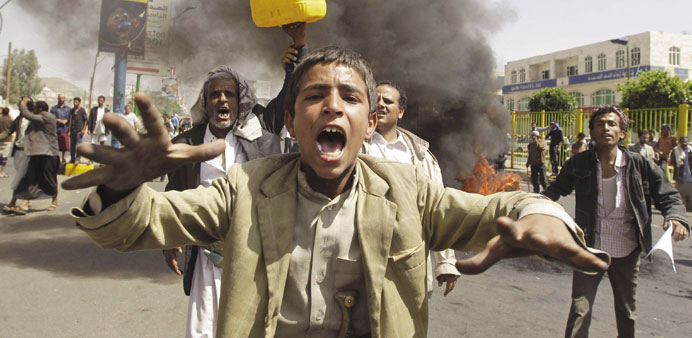
Protesters demonstrating against fuel shortages shout slogans in Sanaa yesterday.
Reuters/Sanaa
Yemeni president Abd-Rabbu Mansour Hadi replaced several top ministers yesterday amid rising popular discontent driven in part by power cuts and high prices.
The changes announced by state news agency Saba included new finance, oil, electricity and foreign ministers, among others.
Gulf neighbours and the West fear for the stability of Yemen. Washington has stepped up support for the government and military and launched deadly drone strikes on suspected Al Qaeda militants there.
The reshuffle was unlikely to immediately assuage anger in Yemen’s 25mn population – 40% living on less than $2 per day - who have struggled with weeks of power cuts and long queues to fill their cars with fuel.
Hundreds of protesters gathered outside Hadi’s house in the capital Sanaa yesterday before the decree reforming the government, angry at a city-wide power cut about to enter its third day.
“Leave us, leave us, down with the corrupt leader!” residents chanted in front of Hadi’s house.
“This failure by the government has turned our lives into hell: no electricity, no gasoline or water. They have to leave us right away,” said protester Mohamed Sharaf.
Impoverished Yemen has been plagued by violence since 2011 mass protests against the rule of veteran leader Ali Abdullah Saleh, who was forced to resign.
The blackout in the capital, widely blamed on the sabotage of oil pipelines by armed tribesmen with grievances against the government, is among the longest dark spells in almost three years of patchy electricity supply since Arab Spring protests unseated Saleh.
The pipeline attacks have deprived the state of revenue to buy fuel products, increasing the cost of food in the one of the Arab world’s poorest countries.
Sanaa’s 2mn residents have been forced to light their homes with candles or private generators, fuel for which is increasingly expensive.
Hadi appointed Yemen’s UN ambassador Jamal Abdullah al-Sallal to the post of foreign minister, making his predecessor Abu Bakr al-Qirbi - a veteran diplomat under Saleh - a member of parliament.
Hadi also named Mohamed Zamam finance minister and Ahmed Abdul Qader Shayyeh oil minister.