


Reuters/AFP
Paris
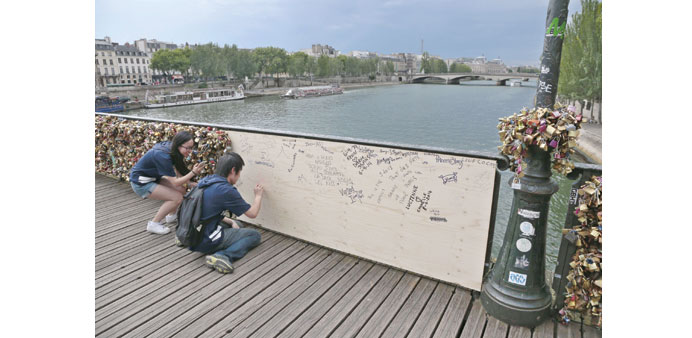
The Pont des Arts footbridge over the Seine in central Paris was closed for a few hours on Sunday after a metal grill laden with padlocks left by amorous couples collapsed onto the walkway.
Padlocks began appearing on bridges in Paris and other European cities more than five years ago left by people seeking to symbolise their enduring love – often inscribed with couples’ names.
Lovers typically throw the keys into the river.
Nobody was hurt by the “love lock” incident, a city official told French media yesterday, adding that the bridge had reopened and the two grills across a 2.4m stretch of the bridge replaced temporarily by wooden panels.
But in a tweet posted on the city’s official website, Bruno Juillard, the city’s elected head of cultural affairs, said that it “confirms that our desire to find an alternative to these locks is a real necessity”.
The railings of several Paris bridges, including the central Pont des Arts which has a commanding view of the Ile de la Cite from the west, have since all but disappeared behind festoons of padlocks. The 155m-long Pont des Arts is completely covered in locks.
Forty locks were also recently removed from the Eiffel Tower.
Paris authorities, who inspect and replace panels twisted or made unsafe by the weight of the locks, have faced calls to clamp down on the practice.
But they have been reluctant to take stiffer measures for fear of hurting the city’s tourist industry and its worldwide reputation as a city of love.
Paris Mayor Anne Hidalgo last month invited citizens to “open a debate around the phenomenon of ‘love locks’ with a view to finding alternatives”.