


Reuters/Oslo
Oil producers must award longer service contracts if they want to cut costs – and should look to Brazil’s Petrobras as an example – but they are struggling to change, said the CEO of Norway’s Aker, a major shareholder in several energy firms.
Oil and gas producers around the globe are cutting back spending plans to save cash after a decade-long spending bonanza cut deep into margins and reduced cash available for dividends.
Capital spending cuts by oil majors will last another “couple” of years, said Oeyvind Eriksen, whose Aker is the biggest shareholder in oil services firms Aker Solutions and Kvaerner, and oil producer Det norske .
But the cutbacks have not been too big, he added, because at the same time the sector is struggling with surging costs partly caused by a lack of qualified labour – which has driven up wages and extended the length of projects.
Oil producers are now looking for ways to lower their costs and Eriksen said that one way would be to give service firms, who do everything from seismic surveying to maintenance, multi-year framework contracts instead of many smaller jobs through frequent tenders.
He also said oil firms should allow for more standardisation in project developments to save on cost. Such a process could involve allowing engineering firms to reuse design elements from previous projects or to use preset design modules.
“A long-term partnership and predictability of volumes to be supplied is a prerequisite for standardisation,” Eriksen told Reuters in an interview. “Petrobras is a role model. Petrobras awards five-year framework agreements, creating predictability for suppliers.”
“It would be a big change for big organisations ... and realistically I don’t expect major changes compared to how the industry operates today,” said Eriksen, a long-time business partner of Norwegianbnaire Kjell Inge Roekke, Aker’s controlling shareholder.
Oil services companies have touted standardisation as a way to cut costs and Aker Solutions already plans combined work on two Statoil fields, but Eriksen said such an approach is proving slow to catch on.
“Standardisation is not new, it’s been the buzzword in the industry for years,” he said. “What we have experienced repeatedly is that individual customers have individual preferences, due to reservoir characteristics, due to their installed base and their maintenance programme.”
Costs can still be reduced, like by outsourcing engineering work to Asia, as Aker Solutions has done, and through new technology. But certain work, like maintenance, depends on local costs and firms may have gone too far in cutting spending in that area, Eriksen added.
Norway is one of the most expensive countries for oil and gas as it has the highest oil tax at 78% and, according to consulting firm Hays, workers in the country’s oil and gas sector earn on average $179,200 a year.
But Eriksen says the sector is still competitive even if there was little chance for salaries to come down. “The Norwegian oil services industry is competitive and the best proof is the subsea success,” Eriksen said. “Companies like GE, Aker Solutions and FMC Technologies all have significant subsea business in Norway, competing in the global market, and I expect that to last for decades to come.”
He also dismissed arguments that Norway, which generates almost a quarter of its gross domestic product from oil and gas, is too reliant on its energy sector.
“The oil and gas industry is the strength of Norway and if we manage to play to our strength, with so many opportunities far beyond the (Norwegian) oil sector, we should not turn such an asset and advantage into a problem,” Eriksen said.
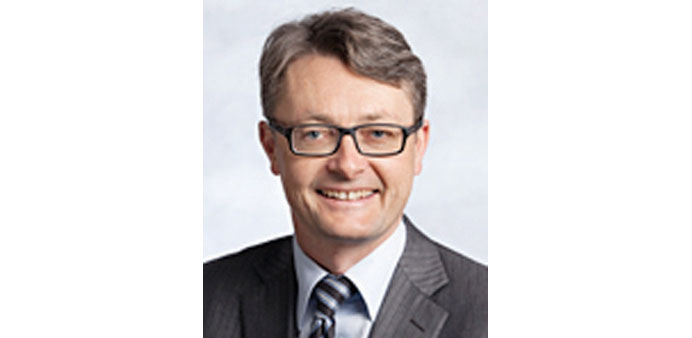
Eriksen: Looking for ways to cut spending.