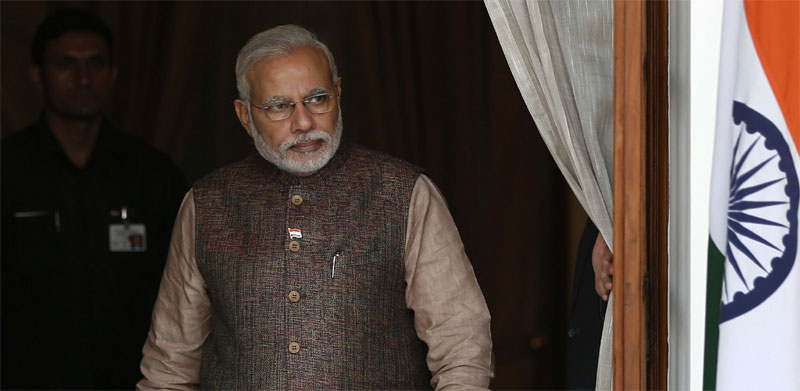
Reuters/New Delhi
India's economic growth picked up marginally from a decade low in the fiscal year ended March, but pro-business Narendra Modi's thumping victory in the recent general election has stoked optimism of an investment-led turnaround in the coming quarters.
Asia's third-largest economy grew 4.7 percent in 2013/14, slower than an official estimate of 4.9 percent and higher than 4.5 percent growth a year earlier. It marks the second straight year of sub-5 percent growth - the worst slowdown in more than a quarter of a century.
Economic growth for the quarter to end-March came in at 4.6 percent from a year earlier, compared with 4.8 percent estimated by analysts in a Reuters poll and a revised 4.6 percent growth in the previous three months.
"We are not able to yet see...how the economy will grow but certainly the mood is upbeat," said A.M. Naik, chairman at the country's biggest engineering firm Larsen & Toubro, who expects growth to pick up to 5.5 percent this fiscal year.
Growth stuck below 5 percent is disappointing for an economy that boasted of a near double-digit economic expansion until a few years back and was widely expected to be one of the main drivers of the global economic recovery.
It also poses a challenge for the new government to generate enough job opportunities to employ the 10 million people who enter the country's workforce every year. New Delhi reckons the economy needs to grow 8 percent a year to prevent a demographic disaster.
Modi won India's first outright parliamentary majority in three decades with a pledge to boost growth and create jobs, raising hopes among investors for a turnaround led by spending on infrastructure.
Ninety-three percent of CEOs in a polled carried out by one of India's industry chambers FICCI said they expect a substantial improvement in the near-term economic situation following the election of a strong government.
"It is likely the infrastructure projects which have been held up for a long time...will hopefully begin to move," said Naik. "We will see the impact of it more like in August, September, because it takes time for things to move."