


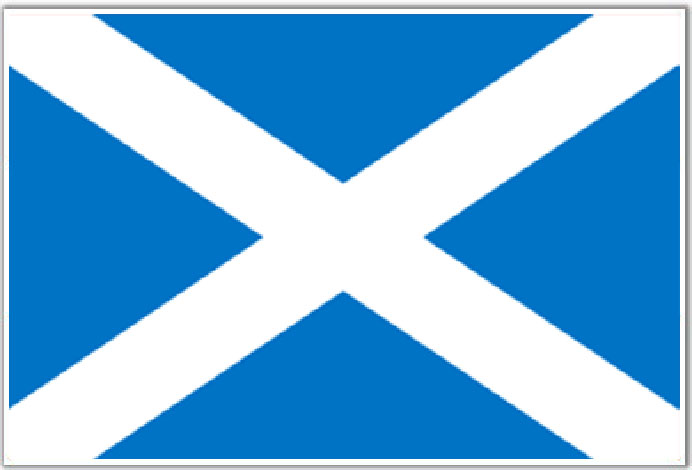
Reuters/Edinburgh/London
The debate over whether Scots will be better off if they break away from the UK intensified yesterday, as pro- and anti-independence camps claimed Scots would be at least £1,000 a year richer.
Scotland holds a referendum on September 18 over whether to end its 307-year union with England, and as that date moves nearer the number of people who are still undecided exceeds the majority who want to retain the union.
Deputy Finance Minister, Danny Alexander - sensitive to criticism that the anti-independence campaign had been too negative - said Scots would each be £1,400 a year wealthier if they stayed in the United Kingdom.
“By staying together, Scotland’s future will be safer, with stronger finances and a more progressive society,” Alexander said. “There simply wouldn’t be the same level of resources available for public services if Scotland were independent.”
But Scotland’s First Minister, Alex Salmond, also claimed that Scots would be better off after independence, saying it would bring benefits of around £1,000 per head a year by 2029 as an independent Scotland had more power to attract immigrants and boost its productivity.
“The latest figures show that by using the powers that only independence will bring we can deliver an independence bonus with increased revenue,” Salmond said.
An opinion poll in January suggested that just 15% of Scots would support independence if it would make them £500 a year poorer, while a gain of £500 would make 52% back independence.
Alexander, who is the highest-ranking Scottish MP in the British government, dismissed Salmond’s claim as a “bogus bonus” and likened him to a shopkeeper who could not tell customers how much he would charge for his wares.
“Salmond has to face up to the fact that what he is proposing is a risky and costly endeavour. If you were buying a product in the shops, you wouldn’t trust someone who doesn’t tell you what the price is.”
Convincing the public of the true cost or benefit of independence is likely to be a major task for politicians.
One major area of dispute is the cost of setting up a new government administration for Scotland.
On Monday, Britain’s finance ministry said this could reach more than £1.5bn - about 1% of gross domestic product - and criticised Scottish nationalists for not giving a figure.
However, Patrick Dunleavy, a professor at the London School of Economics, said on Tuesday that the finance ministry had badly misrepresented his work by suggesting the cost of new public bodies for Scotland could rise to as high as £2.7bn if dozens of new public bodies were needed. Instead, the total cost was more likely to be in the low hundreds of millions of pounds, Dunleavy said.
“Alexander’s claims don’t have a shred of credibility. The Treasury has been caught red-handed trying to cook the books,” said Scottish National Party lawmaker Jamie Hepburn.
Another area of dispute is revenues from North Sea oil, which would be a mainstay of an independent Scotland’s public finances.
Scotland’s latest North Sea tax receipts forecast pencils in receipts of £6.9bn for 2016-17 - more than double the £2.9bn forecast by the independent Office for Budget Responsibility (OBR).
The Scottish government’s central scenario assumes bigger increases in production and lower extraction costs than the OBR, as well as an oil price of $110 a barrel compared to the OBR’s forecast that they will fall below $100.
Cinema chains ‘ban ads on referendum’
Major cinema chains have banned all adverts on the Scottish independence referendum after customers inundated them with complaints, the Guardian reported. The Odeon and Vue cinema chains told the Guardian that all the major chains, including the Cineworld Group and United Cinemas International, had taken a collective decision to ban all referendum advertising from June 5, a week into the four-month-long official campaign. The newspaper said the campaigns for and against Scottish independence were notified of the ban last week. “Following feedback from our customers, which has been duly noted, we have taken the decision not to show any further campaign adverts. Along with the other leading cinema exhibitors, we will not be continuing with any additional campaigns beyond 5 June,” a Vue spokeswoman told the Guardian.