


|
|
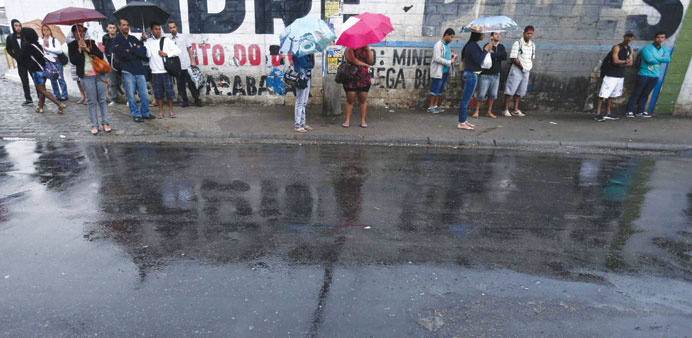
A bus drivers’ strike affected four Brazilian cities yesterday, including two host cities of the World Cup, Rio de Janeiro and Salvador.
The most serious problems were in Salvador, Brazil’s third-largest city, which experienced a third day of stoppages.
Bus drivers are demanding a 12% wage increase, while management is only willing to offer a 9% raise. In Rio, the third such strike in May was only partially successful.
Drivers there are demanding a 40% wage increase.
According to the city’s transport ministry and the bus company owners’ association, 90% of the Rio’s buses were operating normally yesterday.
Similar strikes affected the northern city of Sao Luis, capital of the state of Maranhao, and in Florianopolic, capital of the state of Santa Catarina.
In addition, subway workers union in Sao Paulo - Brazil’s largest city - have called a 24-hour strike for June 5.
A week later, on June 12, Sao Paulo is to host the World Cup opening game between Brazil and Croatia.
Sao Paulo subway workers are seeking a 35.47% raise.
The state company that manages the subway is offering only 5.20%.
Industrial disputes have surged in Brazil in the run-up to the World Cup, as have almost daily protest against public spending for the tournament.
Many Brazilians also want better health, education, transport and other public services. In Sao Paulo, the Homeless Workers Movement (MTST) threatened to halt all activity in the city on June 12, the very day of the opening game, to demand public investment in low-income social housing.
Late Tuesday, police clashed with around 2,500 protesters near the Estadio Nacional in Brasilia. Several members of indigenous communities took part in the demonstration to demand economic change and better conditions in their reserves.
Police used tear gas to disperse the crowd, and the authorities said one officer was injured in the leg with an arrow shot by an indigenous protester.
Globo TV showed images of a police motorcycle that had also been peppered with arrows.
Some of the indigenous protesters could be seen throwing stones at some of the 700 police encircling the stadium.