


Peter Alagos
In the light of efforts to diversify Qatar’s industrial base apart from the dominant oil and gas sector, the country may benefit from a plan to establish “industrial districts” that could provide specialised services to the expanding economy.
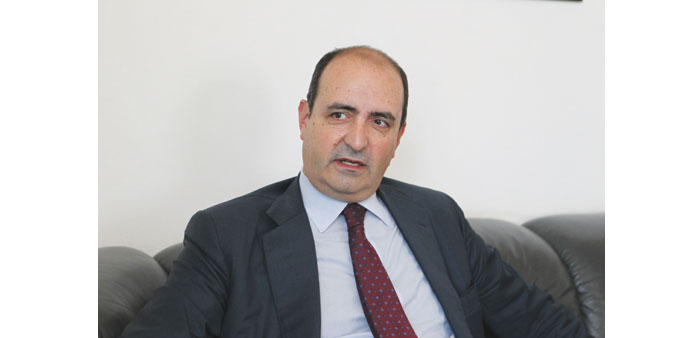
Italian ambassador Guido De Sanctis told Gulf Times that the plan to form industrial districts in Qatar stemmed from an existing business strategy that had been implemented already in Italy.
Each district, according to the ambassador, is composed of “integrated businesses” or a conglomerate of services that can be outsourced by a particular industry.
Citing Ferrari as an example, De Sanctis said the Italian car manufacturer got parts like headlights, seats and other accessories from various suppliers in Torino.
He added that Italy already had industrial districts specialising in furniture, fridges, “white appliances” like dishwashing machines, and textiles in Russia, “which has diversified its industries from the energy sector”.
Italian Deputy Minister of Foreign Affairs Lapo Pistelli, who was on an official visit to Qatar last week, met with HE the Minister of Energy and Industry Dr Mohamed bin Saleh al-Sada to discuss measures to enhance economic ties, particularly in the energy and industry sector.
During the meeting, De Sanctis said there was a “clear signal” that Qatar wanted to diversify its industries toward “high-technology”.
The ambassador stressed that if Qatar would express the need for a demand in high-technology, “Italy is capable of providing this service”.
He said Italy had the technology . “There is the possibility that we can even create this industrial district for Qatar,” De Sanctis said.
Describing it as a “winning formula,” De Sanctis said Qatar had a huge potential in manufacturing “home-made products” by replicating the industrial district formula.
Citing wood as an example, De Sanctis said the proximity of East Asia to Qatar made it easier for Qatar-based manufacturing firms to process raw materials into furniture and other finished products.
“The trick is to have a group of companies processing the raw materials. It would be fantastic to start a discussion of establishing industrial districts in Qatar,” De Sanctis emphasised.
Referring to the Ministry of Economy and Commerce’s launching of 14 neighbourhood markets in various parts of the country early this month, De Sanctis suggested that industrial districts could also be established in far-flung areas like Al Ruwais.
“There is a lot of space there,” he said, referring to Doha’s northern tip. “So, you can establish an industrial district in the community and people will live better, especially when money starts flowing around.”
He also stressed that to realise the plan of building industrial districts in the country “everything should start with the decision by Qatar of producing a certain type of goods here”.
But the ambassador also noted that “Qatar’s priorities are different now”, as he cited the need to meet the deadline of infrastructure projects related to FIFA World Cup in 2022 and Qatar National Vision 2030.
“The signal should come from Qatar. If something is created that will require the presence of small units for production, I am sure Italy will follow because we are ready and confident in the quality that we provide in the market,” De Sanctis said.