


Reuters/Cairo
The leading candidate for Egypt’s new presidency, Abdel Fattah al-Sisi, aims to cut the Egyptian budget deficit to 8.5% of gross domestic product by the fiscal year ending in June 2018 from last year’s 14%, his campaign said yesterday.
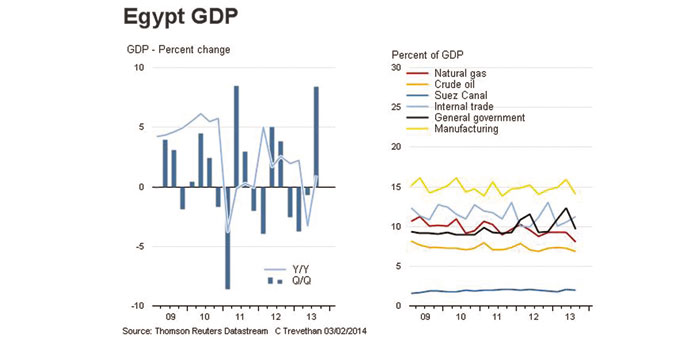
Sisi, who is widely expected to win presidential elections next week, also targets GDP growth of 7% by the same fiscal year, a big jump for an economy that grew only about 2% in the last fiscal year.
About the same growth is expected this year, despite two stimulus packages, each worth around 30bn Egyptian pounds ($4.2bn), offered by the interim government since Sisi toppled former president Mohamed Mursi last July.
Sisi has not given specifics on how he would reform subsidies, which eat up around a fifth of state spending.
Faster growth would push the unemployment rate down to 8%, according to the statement posted on Sisi’s campaign website just days before the election. It now stands at more than 13%, compared with 8.9% before the revolt that swept Hosni Mubarak from power in 2011.
Egyptian Finance Minister Hany Kadry Dimian said on Tuesday the country’s budget deficit would have reached almost 15% this fiscal year without aid. Some Gulf countries pledged over $12bn in aid after Mursi’s ouster.
Dimian said that with aid the deficit would be around 11% this fiscal year. The government was working to keep it below 11% in the fiscal year starting in July. Without reforms, it would stand at 14% of GDP next fiscal year, Dimian said, adding the government would not let that happen.
In terms of monetary policy, Sisi’s campaign statement listed inflation targeting as the central bank’s “primary aim”. Egypt’s central bank has cut key rates by a cumulative 150 basis points since last July. It has cited “feeble” growth rates.
Egypt’s annual core inflation rate, which strips out subsidised goods and volatile items such as fruit and vegetables, slowed to 9.11% in April. The urban consumer inflation rate slowed to 8.9%.
Annual inflation reached its highest rate in nearly four years in November and has been falling since then.