


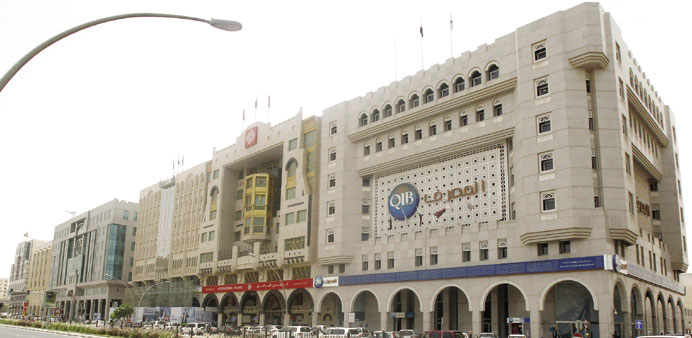
A general view of the Grand Hamad Street that hosts banks and financial institutions in Doha. Across QISMUT, the combined profits of Islamic banks broke the $10bn mark for the first time at the end of 2013, EY said.
The combined profits of Islamic banks in Qatar, Indonesia, Saudi Arabia, Malaysia, the UAE and Turkey (QISMUT) is poised to exceed $25bn by 2018, according to global consultant Ernst & Young (EY).
Across QISMUT, the combined profits of Islamic banks broke the $10bn mark for the first time at the end of 2013, EY said in a report.
“While the profit numbers for Islamic banks are impressive, they are still, on average, 15-19 percentage points lower than traditional banks in these markets. Regionalisation and operational transformation, which are currently underway in several leading Islamic banks, will help to close this gap,” according to Ashar Nazim, global Islamic finance Leader at EY.
The report said global Islamic banking assets with commercial banks are on course to exceed $3.4tn by 2018, fuelled by growing economic activity in core Islamic finance markets.Finding “significant” growth potential for the Islamic banking industry, EY said an estimated 38mn customers bank with Islamic retail banks globally, but only a small number of these customers have fully transitioned from a traditional to an Islamic banking relationship.
The average number of Islamic banking products per customer is just over two, whereas leading traditional banks have an average of five products per customer, it highlighted.
“Building consumer confidence through service excellence, especially when it comes to customers opening accounts and cross-selling can increase the market share of Islamic banks by 40% from these customers,” said Ashar.
Stressing that another major opportunity for Islamic banks is assisting the small and medium enterprises sector due to their cross-border business growth; Gordon Bennie, E&Y MENA Head of Financial Services, said “with increasing trade and capital flows between Turkey, Middle East and Asia Pacific, there is growing appetite to learn about Islamic financial solutions from clients and investors in these markets.”
Similarly, he said, linking with world growth engines like China and India is becoming more important to help build business bridges between these high potential markets.