


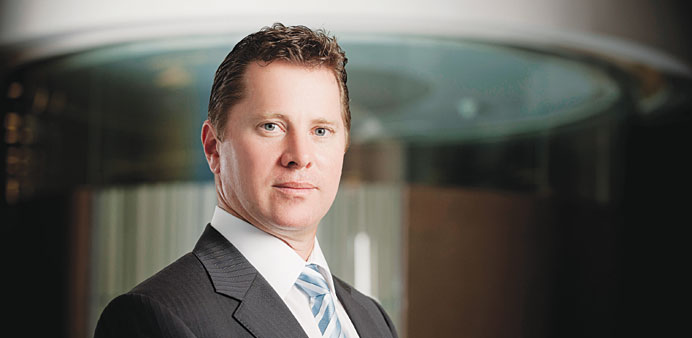
By Tim Evans
Building work that froze in the Middle East property crash is now resuming. This time round the focus is on trade hubs and transport systems rather than iconic skyscrapers and landmarks. Who is benefiting from the latest boom — and is it more sustainable than its predecessor?
Glancing out of my office window in Dubai, I can see a dozen cranes. And they’re moving again. It’s a fair indication of how the construction sector here has revived since the collapse of the real estate market in 2008.
This promising outlook comes after a tough few years for contractors. According to industry research, just $51.4bn in contracts were awarded on building and infrastructure projects in the GCC, Lebanon, Jordan, Egypt and Algeria in 2012, 31% lower than 2011. In the last year however, many projects have resumed in earnest after being put on a ‘go-slow’ during the crisis, when businesses that suspended work faced termination of their contracts. In 2013, the UAE reportedly enjoyed its biggest year of project awards in the last three, securing $34bn of contracts.
But in a positive sign for the longevity of the boom this time round, far fewer of the schemes under way fall into the ‘trophy’ category symbolised by some of the outlandish real estate visions that didn’t progress beyond the dreamscape. Although developers in the Emirates are planning the world’s biggest shopping mall and a $1bn replica of the Taj Mahal, these are overshadowed by the $4.3tn in infrastructure spending that is reportedly scheduled for Mena as a whole before 2020.
Now we are seeing construction spending linked to the parts of the economy that are performing more strongly — transport, trade and tourism. An ambitious regional rail network is under construction. Designed to link Kuwait to Oman via Saudi Arabia, Bahrain, Qatar and the UAE, the gulf railway will reportedly require more than $100bn in capital investment and include 2,177 kilometres of track. In addition to this, a further $76bn in light rail projects are in the pipeline for the region’s metro areas.
In Qatar, projects planned and underway have a total value of $223bn. Here the boom in hotel and infrastructure projects is linked to the hosting of the 2022 World Cup, which will also require the construction of nine new stadia.
Similar trends will prevail for the UAE in the run up to Expo 2020 — with the construction, retail and tourism sectors being the likely beneficiaries. According to HSBC Research, Dubai is looking to spend up to AED26bn on infrastructure, including on the extension of the Red Line to the new airport, Dubai World Central. Add in non-government spending, and the total spend could be up to AED67bn.
But the resurgent construction industry is largely limited to the oil-rich territories. Egypt is still seen as too unstable for immediate to medium term investment. Lebanon — on the face of it a desirable spot for a property boom — suffers from its proximity to the conflict in Syria.
The problems in these territories encourage all the more visitors and workers to make their way to the safe havens of the GCC countries. Increasingly, European entrepreneurs are joining the influx, sheltering from the hungry tax regimes of their home countries.
Who are the beneficiaries in business terms? Energy-related builds are primarily being led by large European contractors. Korean and Turkish companies are leading the way on complex infrastructure projects, while Chinese contractors are snapping up contracts for roads, bridges and water treatment plants. But naturally, the effects are permeating the entire economies of these countries, from sub-contractors and the import of construction materials to the supply of food for the expanding populations.
As to whether this new boom is sustainable, the signs seem good. Many lessons have been learned from the past decade. Middle East governments have acted to clarify the famously opaque property laws — though more reform would still be welcome. Saudi Arabia’s new arbitration law, designed to speed up dispute resolution outside the court system, is a welcome step in the right direction.
A rule of thumb for property markets around the world is that if you see too many cranes outside your window, your economy is heading for a property crash. On that basis, the 12 cranes on the Dubai skyline look like a comfortable number.
* The author is the regional head of Global Trade and Receivables Finance, HSBC Mena. The views expressed are his own.