


AFP
Saudi Arabia’s death toll from Mers has risen by five to 126 fatalities since the mystery respiratory virus first appeared in the kingdom in 2012, the health ministry said yesterday.
Two men, aged 47 and 60, died in the western city of Madinah on Wednesday, an 84-year-old man died in Makkah and a fourth died in the Red Sea port of Jeddah.
All three cities are closely associated with the annual Haj pilgrimage, with commercial capital Jeddah being the main point of entry for pilgrims from overseas.
The fifth person to die was a woman, who succumbed in the capital Riyadh, the ministry’s website reported.
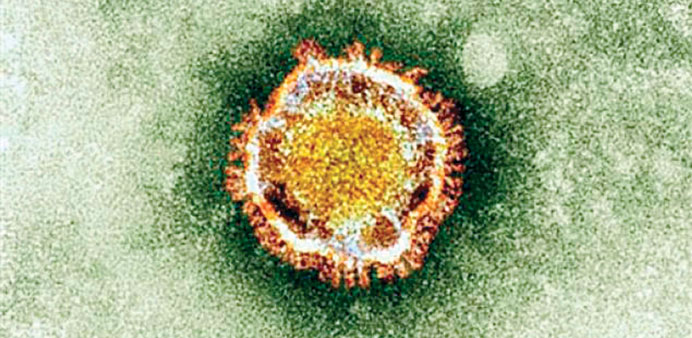
It added that the total number of infections from Middle East Respiratory Syndrome coronavirus (Mers-CoV) in the kingdom was now 463.
Mers cases have also been reported in the United Arab Emirates, Jordan, Egypt, Lebanon and even the United States, with most involving people who had travelled to Saudi Arabia or worked there, often as medical staff.
The great majority of deaths from the virus have been in Saudi Arabia, however.
Mers is considered a deadlier but less-transmissible cousin of the Sars virus that erupted in Asia in 2003 and infected 8,273 people, 9% of whom died.
There are no vaccines or antiviral treatments for Mers, a disease with a mortality rate of more than 40% that experts are still struggling to understand.
Like Sars, Mers appears to cause a lung infection, with patients suffering from a temperature, coughing and breathing difficulties.
But it differs in that it also causes rapid kidney failure.
Research has suggested that camels are the likely source of the virus.
The World Health Organisation said yesterday it would hold an emergency meeting next week on the virus.
The UN health agency will host the emergency meeting on Tuesday to discuss the worrying spread of the virus, spokesman Tarik Jasarevic told reporters in Geneva.
The WHO’s emergency committee has already met four times to discuss the mysterious coronavirus.
“The increase in the number of cases in different countries raises a number of questions,” Jasarevic said, without giving further details of the aim of the new talks.
The WHO experts will brief reporters at the end of the teleconferenced meeting on Tuesday evening, he said.