


Reuters
Previously unknown digital work made by pop artist Andy Warhol was resurrected from ageing floppy disks by forensic computer experts from Carnegie Mellon University, the school announced on Thursday.
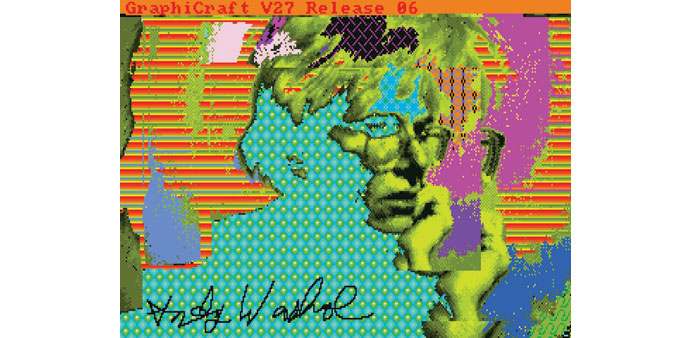
A dozen newly discovered images were unearthed from the 1985 computer disks by the university’s computer club.
They depict common Warhol subjects including Campbell’s Soup cans, self-portraits, bananas, and Marilyn Monroe as well as doodles and camera shots of a desktop.
Carnegie Mellon art professor Golan Levin said the work was recovered thanks in part to someone posting on YouTube a 1985 infomercial showing Warhol using an Amiga computer to create a digital portrait of singer Debbie Harry.
A Warhol fan, artist Cory Arcangel, saw the YouTube video and in 2011 began investigating whether there was more computer art from Warhol to be found.
His inquiry brought him to the Andy Warhol Museum’s archives in Pittsburgh, where he found a cache of floppy disks that remained unlabelled because the museum lacked the outdated technology needed to read them.
Arcangel helped link the museum with the computer club at Carnegie Mellon in Pittsburgh, one of the top US technology schools.
After some digital sleuthing, the club used a process called retrocomputing to reveal the images in a matter of hours.
“The purely digital images, ‘trapped’ for nearly 30 years on Amiga floppy disks stored in the archives collection of the Andy Warhol Museum, were discovered and extracted by members of the Carnegie Mellon University Computer Club,” the university said in a statement on its website.
The newly uncovered art is owned by the Andy Warhol Foundation, although it was commissioned by Commodore International to promote its 1985 Amiga 1000 computer.