


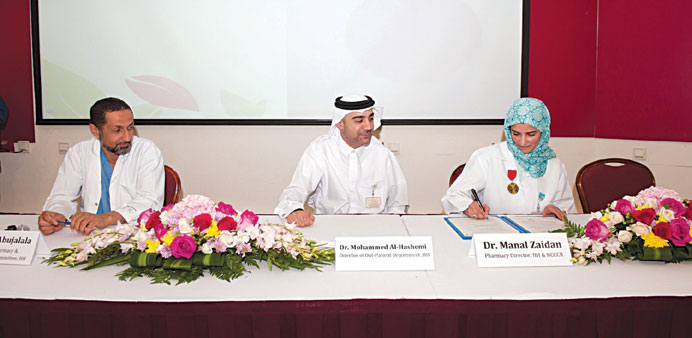
Heart Hospital (HH) has established an Anti-coagulation Management Service (AMS), which aims to allow pharmacists to manage dedicated anti-coagulation clinics at the hospital.
The hospital currently offers two anti-coagulation clinics, managed by physicians, which will gradually be taken over by pharmacists.
The AMS is boosting pharmacist-led anti-coagulation services between March and June in an effort to offer enhanced services at HH to patients who receive the anti-coagulation medication warfarin (medicine that prevents blood-clotting). A dedicated anti-coagulation clinic exclusively run by pharmacists will be set up at the hospital in the near future.
“The idea of having anti-coagulation clinics run by pharmacists is supported by a lot of current literature and research and is done at top-notch hospitals worldwide,” said Dr Manal Zaidan, director of Pharmacy at HH and National Centre for Cancer Care and Research.
“As our vision is to be a world-class centre of excellence for providing comprehensive pharmaceutical care, we have developed AMS through a multidisciplinary effort by several departments at the hospital, including Medical Cardiology, Cardiothoracic Surgery, Dentistry, Maxillofacial Surgery, Pharmacy, Nursing, Outpatient Department and the Laboratory, with the support of Centre for Healthcare Improvement and Health Information Systems, to assure timely and efficient assessment and monitoring of our patients who take this type of medication,” said
Dr Zaidan.
Around 50 representatives from each department attended the signing of a collaborative agreement between HH’s Out-patient Department director Dr Mohamed al-Hashemi, HH’s Pharmacy & Therapeutics Committee chairperson Dr Salem Abu Jalala, HH chief executive officer Dr Lionel Jarvis and Dr Zaidan.
Dr Zaidan noted that the aim of the anti-coagulation clinics is to be “a one-stop-shop”.
“Pharmacists will assess the patients, perform the International Normalised Ratio test, educate and dispense warfarin within the clinic. This process will decrease the waiting time for patients, especially in that they will not have to go to the outpatients pharmacy to get their medication,” she
explained.
“Currently, physicians at the two clinics offer anticoagulant services to 1,100 patients per month, with an average of 50 per day in one clinic. The pharmacist-led clinics will result in decreased patient waiting time, better patient education, expansion of services and evidence-based and safer practice,” she added.