


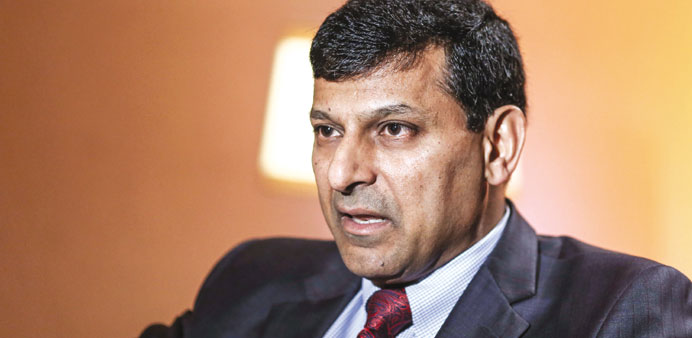
Rajan: Winding down of the US stimulus could spell more trouble for emerging markets.
Reuters/Washington
The head of India’s central bank ran into a wall of resistance on Thursday when he urged some counterparts in developed economies to more formally consider the effects their domestic stimulus has on emerging markets.
Alongside central bankers from the US, Europe, and Brazil, Raghuram Rajan took the stage at a high-profile event here to list his proposals for better monetary co-operation and a global “safety net” that could provide funds for countries in case of economic emergency.
He has grown increasingly vocal for change given how hard the currencies and stocks of emerging economies such as India have been rocked by big shifts in capital flows brought on by the unprecedented monetary accommodation in rich nations.
“We should examine the situation and spillover effects, by all means empirically, to the extent we can,” Rajan, governor of the Reserve Bank of India, said at the Brookings Institution.
“This is not a healthy place,” he added. Emerging markets absorbed a flood of investment in the wake of the global recession as central banks in developed nations sharply depressed interest rates, sending investors scrambling for higher yields in countries like Turkey, Argentina and India.
While the Bank of Japan and the European Central Bank could pump even more cash into global markets with pending bond-buying plans, the US Federal Reserve began this year to slow its money printing, causing headaches for policymakers like Rajan who saw emerging currencies tumble when the Fed first indicated bond purchases would be tapered. Citing an International Monetary Fund report published on Tuesday, Rajan said the message is: “Industrial countries are going to do what they have to do; emerging markets have to adjust.”
“I think we need language which is more even-handed,” added Rajan, a former IMF chief economist. “It’s not that emerging markets have infinite ability to adjust and so we should keep that in mind going forward.”
Seated with him on the stage, ECB Vice President Vitor Constancio slightly shook his head. “I would not subscribe to the criticisms,” he said, noting that emerging economies were much closer to full employment than rich nations.
Constancio said past efforts at global coordination failed in part because emerging-market economies refused to accept that their currencies would have to appreciate in the face of policy easing in the developed world.
The eurozone, for one, is struggling with high unemployment and low inflation, and last week opened the door to more stimulus. Advanced economies must “do the utmost to sustain aggregate demand and growth,” Constancio said. Chicago Federal Reserve Bank president Charles Evans, who was seated next to Rajan, said low inflation was a serious problem globally.
“If policymakers fail to get on top of this emerging risk before too long, I’m not sure anyone is going to come out of this too well,” he said. While the Fed pays some attention to the impact of its policies on emerging markets, its focus is on the US, Evans added.
Then, in a surprise to some, former Fed chairman Ben Bernanke stood from the audience to ask the first question and reminded the panel that the Fed’s chair or vice chair meets up to 10 times a year with counterparts in emerging markets.