


|
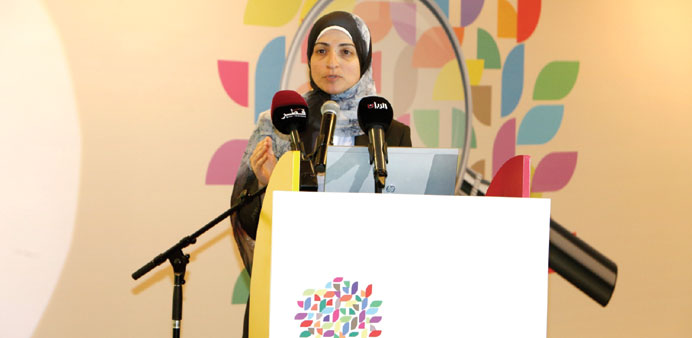
Qatar National Research Fund (QNRF) yesterday hosted the second in the series of Qatar Foundation Research & Development seminars in which key findings from various health-related projects were revealed. |
The Research Outcome Seminars (ROS) are designed to give researchers a public platform to shed light on the results of QNRF funded cutting-edge research.
Focusing on biomedical and health research, four researchers gave their in-depth findings on pressing topics in the field that could ultimately benefit the general population in Qatar as well as have an impact globally.
Executive director Dr Abdul Sattar al-Taie said QNRF, now in its second phase of development since its inception in 2006, aims to focus on the outcome and impact of its funded research projects by accelerating the dissemination of research results through outreach initiatives.
QNRF’s Biomedical and Health Sciences programme manager Dr Thenaa K Said explained that the presented projects highlight Qatar’s potential to produce cutting edge and serious research in the biomedical and health field.
Dr Suhaila Ghuloum, senior consultant psychiatrist at Rumaillah Hospital, Hamad Medical Corporation, and assistant professor at Weill Cornell Medical College in Qatar (WCMC-Q), presented her study into determining the prevalence of major mental health disorders among the Qatari population between the age of 18 and 65. The research has contributed to the development of Qatar National Mental Health Strategy and is guiding implementation plans.
Dr Laith Abu-Raddad, associate professor of Public Health at WCMC-Q, presented his work on HIV. His study examined why those infected with HIV and another infection, such as malaria, have a higher concentration of the HIV virus and are therefore able to more easily pass the sickness to other individuals, increasing the risk of epidemics in regions such as in sub-Saharan Africa, where contagious diseases other than HIV are most commonly found.
Dr Nasser Mostafa Rizk, associate professor of Human Physiology, Pathophysiology and Endocrinology from the College of Arts and Sciences in Qatar University, presented the results of his team’s research that had found a better way to predict the course of diabetes by comparing metabolites, the products of metabolism, of diabetic versus non-diabetic patients.
Dr Rizk explained that, as more knowledge is gained, the findings can be taken to a medicinal chemist who can then help target pathways and develop better interventions.
Dr Abdallah-al Nasser, head and senior consultant of Paediatric Haematology/Oncology Department at Hamad General Hospital, Hamad Medical Corporation, spoke about the study conducted by The Middle East Childhood Cancer Alliance.
His team used childhood acute lymphoblastic leukaemia as a model to uncover the biology of childhood cancer and also looked at the resources available in Middle Eastern and neighbouring countries.
The first seminar held in the ROS series was conducted in December 2013 and featured projects in the disciplines of energy and environment.
QNRF is a member of Qatar Foundation for Education, Science and Community Development and a centre within Qatar Foundation Research and Development.