


By Sami Aboudi/Muscat/Reuters
Young Omanis who took to the streets in 2011 to demand jobs and better economic prospects may have had an impact, as authorities are making a start on a task that, even if coincidentally, meets one of the protesters’ key demands - fighting corruption.
“The government’s campaign (is part of a response) ... to the 2011 popular demands, smoking out the termites that infested the structure and making Oman’s economy more competitive through transparency and fair and free competition,” says Ahmed al-Mukhaini, a former assistant secretary-general for Oman’s consultative Shura Council who advises on the country’s political affairs.
Oman has been pushing cautious reforms, including widening the powers of the Shura Council.
In his first response to the February 2011 protests, Sultan Qaboos bin Saeed replaced ministers and promised to create 50,000 public sector jobs for its increasingly youthful population.
Since then the authorities have turned their focus to corruption, strengthening domestic laws by boosting the powers of the state auditor to investigate suspicious cases and referring a number of public officials and private sector executives to the prosecution. Nearly 30 people have been sentenced to prison terms ranging from one to 23 years.
It has also ordered public sector employees to meet financial disclosure requirements and signed the UN Convention against Corruption (UNCAC), which provides a framework for local institutions to draw up bylaws and executive regulations.
Analysts say the steps are among several signs that Oman’s government is listening to its citizens following the protests.
“The Sultan has taken a number of steps to respond to some of the grievances articulated by protesters, and the current corruption crackdown would seem to be part of this,” said Jane Kinninmont, a Middle East expert at Chatham House.
If the campaign succeeds, the Oman government hopes to not only win praise at home and abroad but also reassure foreign investors about the rule of law in the country of 3.9mn people.
But some businessmen are concerned the crackdown could have a negative effect, at least in the short-term, by causing officials and executives to become wary of government-related contracts because of the possible legal repercussions, resulting in delays to investment projects.
An Egyptian businessman who operates in the country said there was a risk business could stall.
“If you go to board rooms, everyone is discussing it (the crackdown on corruption) and how it may affect their business,” said an Omani banker, declining to be named because of the sensitivity of the issue.
Transparency International’s 2013 corruption perception index report ranked Oman at 61, far behind the United Arab Emirates and Qatar, which came in at 26 and 28 respectively.
Omanis blame a system that allows senior government officials to simultaneously hold positions in private sector companies, leading to a potential conflict of interest in contracts involving public projects.
Al-Mukhaini said the prosecutor’s office appears to have been shocked by the extent of the corruption they had found over the past 12 months.
“We are only seeing the tip of the iceberg because they are still detaining people and are still investigating,” he said.
An Omani government source said state auditors were targeting corruption in the energy and contracting sectors in “a state drive to fight corruption in all its forms and in accordance with the results of investigations by an independent judiciary”.
Dozens have been taken to court since late last year on charges ranging from taking bribes in exchange for government contracts to appropriating state lands for themselves or for relatives.
In one of the earliest cases, the Al-Zaman newspaper reported last October that Swiss authorities had contacted Oman after noticing suspicious deposits worth “tens of millions of dollars”.
Oman promptly launched an investigation, working closely with the Swiss, leading to the conviction on February 27 of state-owned Oman Oil Company CEO, Ahmad al-Wahaibi, on charges of taking $8mn in bribes, abuse of office and money laundering. He was sentenced to a total of 23 years in jail. Court documents showed the money had been paid into Wahaibi’s Swiss bank account.
Swiss authorities declined to comment on the case.
“The government has begun to realise the extent of these violations and has begun a campaign to fumigate the system,” said journalist Zaher al-Abri, who was the reporter on the original Al-Zaman story.
“I believe that Sultan Qaboos himself is following up on this file,” he told Reuters.
In at least one case, corrupt practices could have a direct heavy financial price for Oman, court proceedings showed.
At a trial in January in which a finance ministry official was convicted of taking a bribe and sentenced to three years in jail and fined 600,000 Omani rials ($1.56mn), court documents showed that a Turkish firm was demanding nearly $200mn in damages after a $743mn contract originally awarded to it was given to another local Omani contractor.
The company, Attila Dogan, confirmed it had sent a “Notice of Dispute to the Sultanate of Oman and (to) Sultan Qaboos under the Turkey-Oman Bilateral Investment Treaty, demanding some $183mn in damages and harm”.
The compensation demand is still pending.
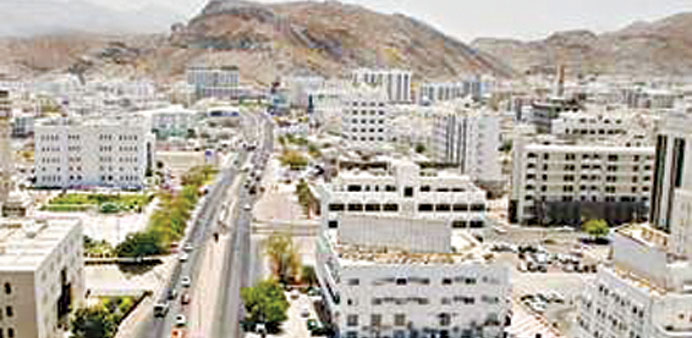
A view of Muscat, Oman’s capital.