


|
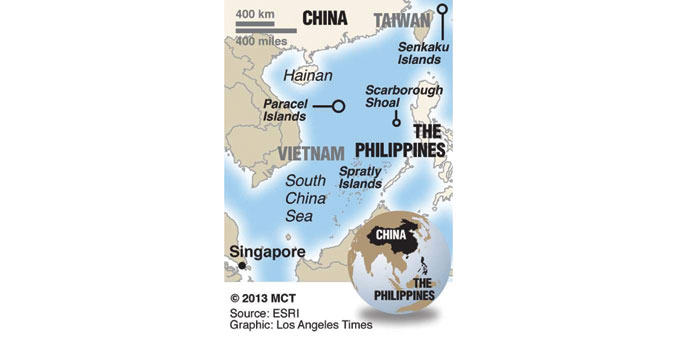
In the realm of geopolitical disputes, the barren Paracel Islands are a far cry from the mountains of Kashmir or the alleys of Gaza. Claimed by both China and Vietnam, the archipelago comprises some 30 tiny spits of land in the middle of the South China Sea with innocuous names like Woody Island and Antelope Reef. |
No one lives there, nor has there been any evidence that lucrative natural resources lie beneath its lagoons and reefs. But, experts say, at a time when regional economies are booming - and nationalist sentiments swelling - the Paracels and the heavily contested Spratly islands further south remain a flashpoint in this part of the world, where the traditional balance of power is tilting further toward China.
Tensions flared most recently years when the Chinese government announced it would begin developing high-end tourism on a few of the Paracels as part of an ambitious plan to draw tourists from around the world to Hainan, a Chinese island province off the mainland’s southern coast.
But while planners dream of creating a Chinese Hawaii - with the Paracels’ clear waters a potential luxury destination for divers - the leaked proposal made Hanoi bristle almost instantly.
China has retained de facto control over the archipelago since seizing it in its entirety with gunboats in 1974, but Vietnam has stubbornly clung to its long-standing territorial claims over the archipelago.
The spat may be a minor compared to incidents in the past - the two countries fought a bloody border war in 1979, and in 1988 a naval battle near the Spratlys left 70 Vietnamese sailors dead.
But it comes amid a steady buildup of Chinese might in the region. Ralf Emmers, an expert on the South China Sea and associate professor at the S Rajaratnam School of International Studies in Singapore, says the Chinese tourism gambit is a move “to make its sovereignty claims over these islands a fait accompli.”
Vietnam watchers point to an escalation of tensions since the 2007 completion of a strategic Chinese submarine base on Hainan Island, just over 200km from Vietnam’s eastern shore. The base has enabled Beijing to project its power not only in its own backyard, but further into the Pacific and Indian oceans as well.
Open conflict, of course, is unlikely given the scale of economic integration in Southeast Asia. Sino-Vietnamese relations in most arenas are as robust as they’ve ever been. But observers are concerned that governments have yet to come up with an effective way to arbitrate this maritime dispute.
In 2002, China signed a code of conduct with the Association of Southeast Asian Nations (Adean), of which Vietnam is a member, pledging to refrain from activities that would destabilise the fragile status quo in the South China Sea. Few parties have kept to the spirit of the agreement.
The Spratlys, an island chain far larger than the Paracels, are claimed by China, Vietnam, the Philippines, Malaysia, Brunei and nominally by Taiwan, and resemble a Risk game board with territories grabbed pell-mell over the years in a scramble for land and influence.
Malaysia has set up a diving resort on one of its own reefs, while most other nations have military posts on their islands.
“The Asean model has been more or less useless,” says Simon Shen, a professor of international relations at the Chinese University of Hong Kong. “The official discourse is (for claimant nations) to co-develop (the islands), but this is almost impossible given the nationalism the dispute inspires.”
In China and Vietnam, in particular, nationalist netizens have pressured their governments to remain firm on issues of sovereignty. Both sides have dredged up archival evidence supposedly linking these clusters of uninhabited rocks in the sea to the glories of ancient dynasties and emperors.
Walking such a precarious tightrope means Hanoi - as well as other governments claiming the Spratlys and the Paracels - have to measure their actions carefully.
“The real risk in the South China Sea,” says Emmers, “is that of a miscalculation that could lead to skirmishes and a clash of arms.”
As signs of meaningful co-operation are few, most expect this tacit consolidation of interests - including China’s economic expansion into the Paracels - to continue.
How this chess game plays out may have broader ramifications as the Chinese military extends its clout and influence in the coming decades. “It’s an interesting showcase for what the future of Chinese naval power may look like,” says Emmers. “And not just in the South China Sea.”